Fed Rate Cuts October 2025: What It Means for Your Retirement
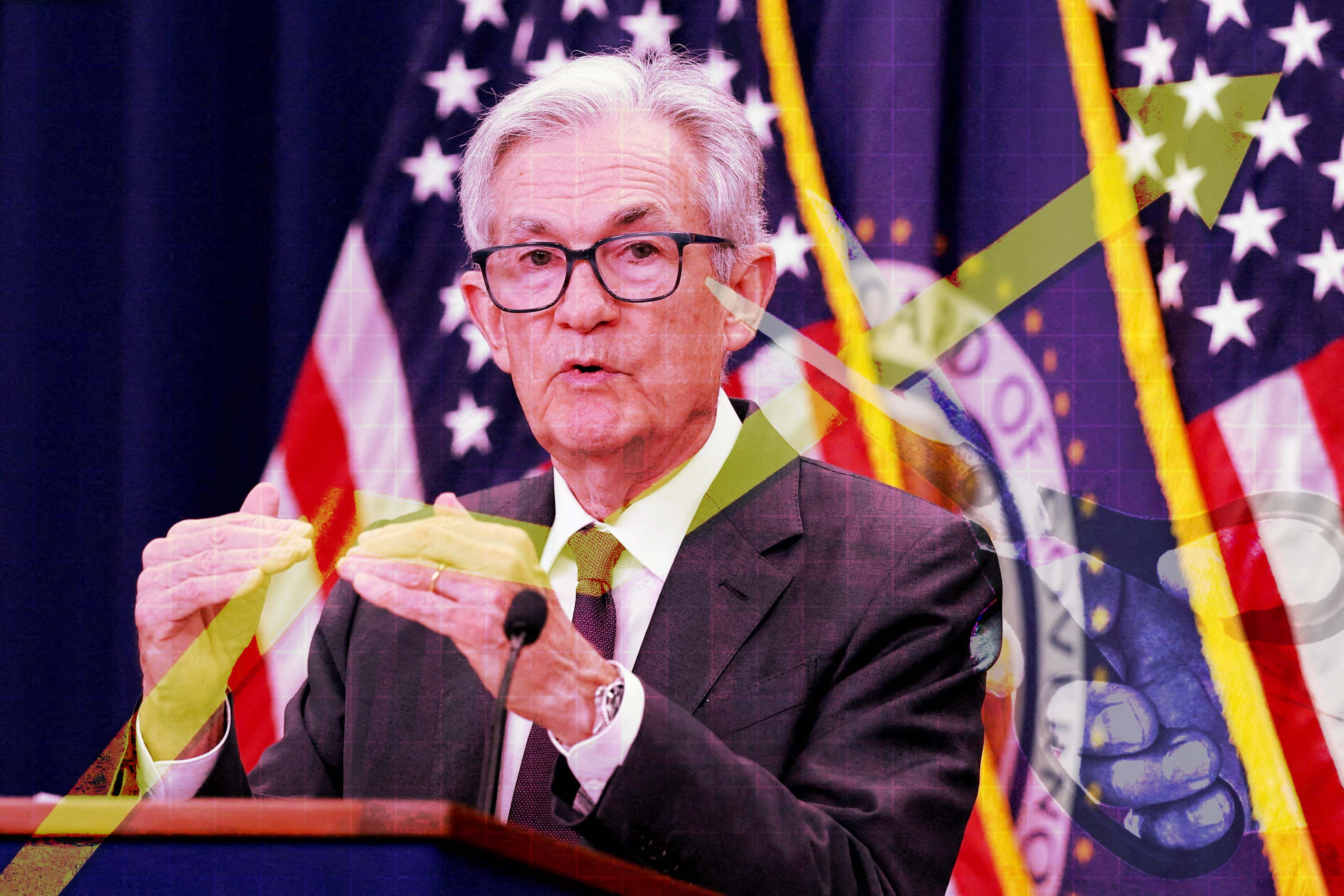
The Federal Reserve cut interest rates for the second time this year on October 29, 2025, lowering the benchmark rate by a quarter point to a range of 3.75% to 4%.
While this might sound like routine monetary policy, the circumstances surrounding this decision reveal deep concerns about the American economy and what it means for anyone with retirement savings.
A Divided Federal Reserve Signals Uncertainty
What made this rate cut particularly noteworthy wasn't just the decision itself, but the unprecedented division among Federal Reserve officials.
Two members of the Federal Open Market Committee voted against the majority decision, but for completely opposite reasons. Stephen Miran, a recent Trump appointee, argued for a larger half-point cut. Meanwhile, Jeffrey Schmid, president of the Kansas City Fed, preferred no rate cut at all.
This kind of split decision at the highest levels of our central banking system tells us something critical. The economic path forward is far from clear, and even the experts tasked with steering monetary policy can't agree on the right course of action.
Fed Chair Jerome Powell made the uncertainty even more explicit during his post-meeting press conference. "A further reduction in the policy rate at the December meeting is not a foregone conclusion, far from it," Powell stated.
He went on to explain that there were "strongly differing views" among committee members about how to proceed, with "a growing chorus" of officials wanting to "at least wait a cycle" before cutting rates again.
The Economic Picture Behind the Fed Rate Cuts
The Federal Reserve's dual mandate is to maintain maximum employment and stable prices. Right now, they're struggling to balance both objectives simultaneously.
Powell acknowledged that while the economy appears strong in aggregate, there's a troubling bifurcation happening beneath the surface.
High-income households continue spending freely, which masks the genuine financial pressure facing low-income Americans. Powell specifically cited the alarming rise in subprime auto loan defaults, which have doubled since 2021 to 6.43% according to Fitch Ratings.
This isn't just a statistic. It's a signal that ordinary Americans are struggling to meet their basic financial obligations.
The labor market is also showing signs of weakness. Job gains have slowed significantly throughout 2025, and unemployment has edged upward. While layoffs remain relatively contained, the pace of hiring has flattened considerably.
For workers and retirees alike, this represents a concerning trend that could accelerate if economic conditions deteriorate further.
Perhaps most troubling is the inflation picture. Despite the Fed's efforts to bring prices under control, inflation is still running at 3% annually, well above the Federal Reserve's 2% target. The most recent Consumer Price Index report showed inflation actually moving higher, driven by increased energy costs and price pressures related to tariffs on imported goods.
Making Policy Decisions Without Critical Data
Here's something that should concern every American with money in the markets. The Federal Reserve is making these massive monetary policy decisions while essentially flying blind. The ongoing federal government shutdown has halted the collection of critical economic data that the Fed normally relies on to make informed decisions.
The Bureau of Labor Statistics, which produces essential reports on employment, unemployment, and job creation, has suspended data collection due to employee furloughs. The last comprehensive jobs report was released in early September, meaning the Fed is working with information that's nearly two months old.
When asked how the continuation of the government shutdown might affect the Fed's December meeting, Powell admitted, "it is hard to say."
He noted that while the central bank has other means of getting economic snapshots, the lack of official government data creates significant challenges. "The next meeting is six weeks away, so we don't know what we are going to get," he said.
This is the environment your retirement savings are navigating right now. A divided Federal Reserve making trillion-dollar decisions with incomplete information, persistent inflation eating away at purchasing power, a weakening labor market, and ongoing trade tensions that continue to drive up consumer prices.
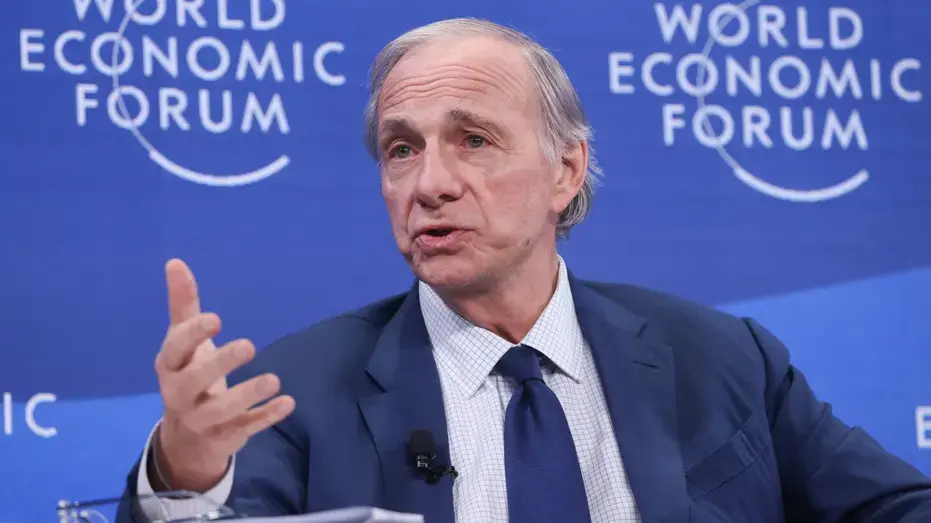
Ray Dalio on Gold as the Safest Money
While the Federal Reserve grapples with these challenges, Ray Dalio, founder of Bridgewater Associates and one of the world's most successful investors, just published a comprehensive analysis that every American with retirement savings should read.
His conclusion is remarkably straightforward. Gold is the safest money.
Dalio isn't making a speculative investment pitch. He's making a historical observation backed by thousands of years of evidence across virtually every civilization. Gold has been valued as money throughout human history, while all other currencies have come and gone.
According to Dalio's analysis, throughout history all currencies have been either linked to hard assets like gold or silver, or they've been fiat currencies backed by nothing but government promises. When countries operated under gold-backed monetary systems and accumulated too much debt, the system eventually broke down. Leaders faced a choice: stick to their gold commitments and face deflationary depression, or break their promises and print more money, leading to inflation and higher gold prices.
Since 1971, when the United States completely abandoned the gold standard, we've lived in a pure fiat monetary system. There are no limits on how much money can be created beyond the discretion of central bankers.
And history shows that when there's too much debt relative to the money needed to service it, central bankers always choose the same path. They create more money and credit, which typically leads to higher inflation and higher gold prices.
Why Gold Matters for Retirement Protection
Gold has maintained its purchasing power over very long time periods, which is why it's now the second-largest reserve currency held by central banks worldwide. While other investments may offer higher returns during certain periods, gold serves a different purpose in a portfolio. It's protection, not speculation.
Dalio points out that gold doesn't provide interest like bonds or dividends like stocks. Over long periods, it has delivered a real return of about 1.2%, similar to cash. But gold has been negatively correlated with cash and other paper assets, meaning it tends to hold or increase its value precisely when other assets are declining.
What makes gold particularly valuable right now is its resistance to confiscation and devaluation. Gold doesn't depend on someone else making payments to give it value. It can't be stolen in cyberattacks. It can't be devalued by a government printing press running overtime.
As Dalio explains, "It is the toughest money to grab because it can be held in one's own secure possession, unlike all other monies that require others to make payments of money to give them value."
This characteristic becomes especially important during times of monetary and debt crises, or during periods of economic warfare through sanctions and tariffs. During such times, gold has historically gone up significantly in value, or more accurately, it's been the money that didn't fall in value while everything else declined.
How Much Gold Should You Own?
When it comes to portfolio allocation, Dalio recommends that investors think of gold as a strategic asset allocation decision rather than a tactical market-timing play. He suggests that most investors should hold between 5% and 15% of their portfolio in gold, depending on what other assets they own and their individual risk preferences.
But here's the striking observation Dalio makes. Most investors don't own any gold at all. Despite thousands of years of history demonstrating gold's value as a monetary asset and store of wealth, the average American has zero exposure to precious metals in their retirement portfolio.
If your retirement savings are sitting entirely in cash-backed assets like a 401k plan, IRA, TSP, stocks, bonds, or cash in a savings account, you're exposed to every risk we've discussed. Currency devaluation through inflation. Government policy mistakes. Market volatility. The declining purchasing power of the dollar as the national debt explodes and central banks around the world diversify away from dollar reserves.
The Case for Gold in Today's Environment
Consider the specific factors at play right now. The Federal Reserve is cutting interest rates while inflation remains elevated above their target. The national debt continues to grow at an unsustainable pace. We're witnessing economic warfare through tariffs and sanctions. Countries around the world are actively challenging the dollar's status as the world reserve currency. Central banks globally are buying gold at record levels.
These aren't theoretical concerns. They're current realities that directly impact the future value of your retirement savings. The Fed just told us they don't know what they're going to do at their next meeting. They're making decisions with incomplete data in an environment of genuine economic uncertainty.
Gold isn't about getting rich quickly. It's not about speculation or trying to time the market. It's about having a portion of your wealth in an asset that has held its value through every kind of crisis, in virtually every country, for thousands of years. It's about diversification that actually provides protection when monetary systems come under stress.
As Dalio notes, during times when there's a lot of debt relative to the amount of money needed to service it, and when there are elevated risks of confiscation through taxation or economic policy, gold has consistently proven its worth as the most fundamental form of money.
Protecting Your Retirement in Uncertain Times
The October 2025 Fed rate cuts reveal an uncomfortable truth. The experts managing our monetary system are divided, working with incomplete information, and uncertain about the path forward.
Meanwhile, one of the world's most successful investors is pointing to gold as the safest money, especially during times like these.
Your retirement savings deserve more than hope and uncertainty. They deserve the kind of protection that has worked throughout human history, across every civilization, through every crisis. That's what gold provides.