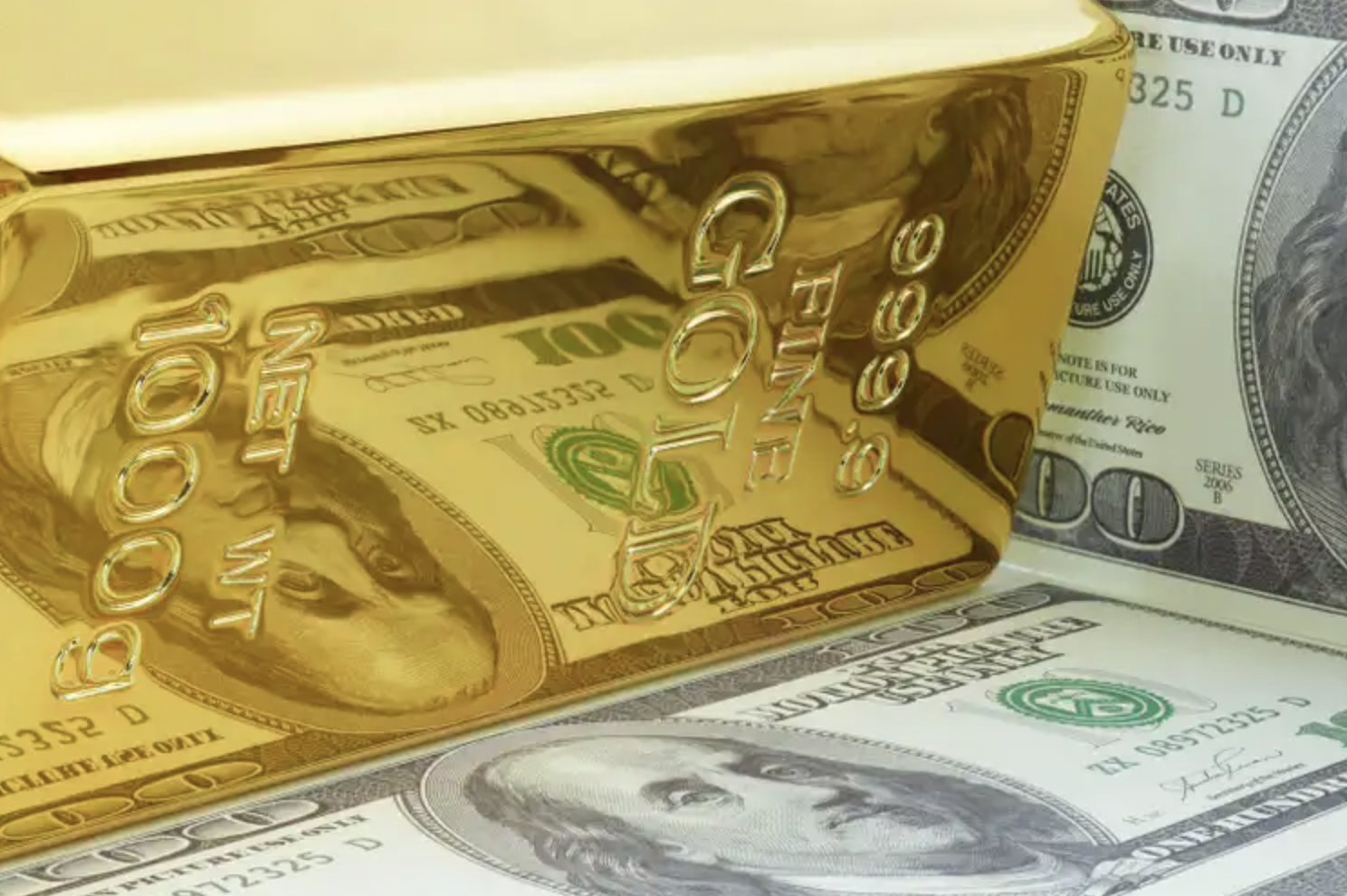
The US Dollar's Historic Decline. What's Really Happening In 2025.
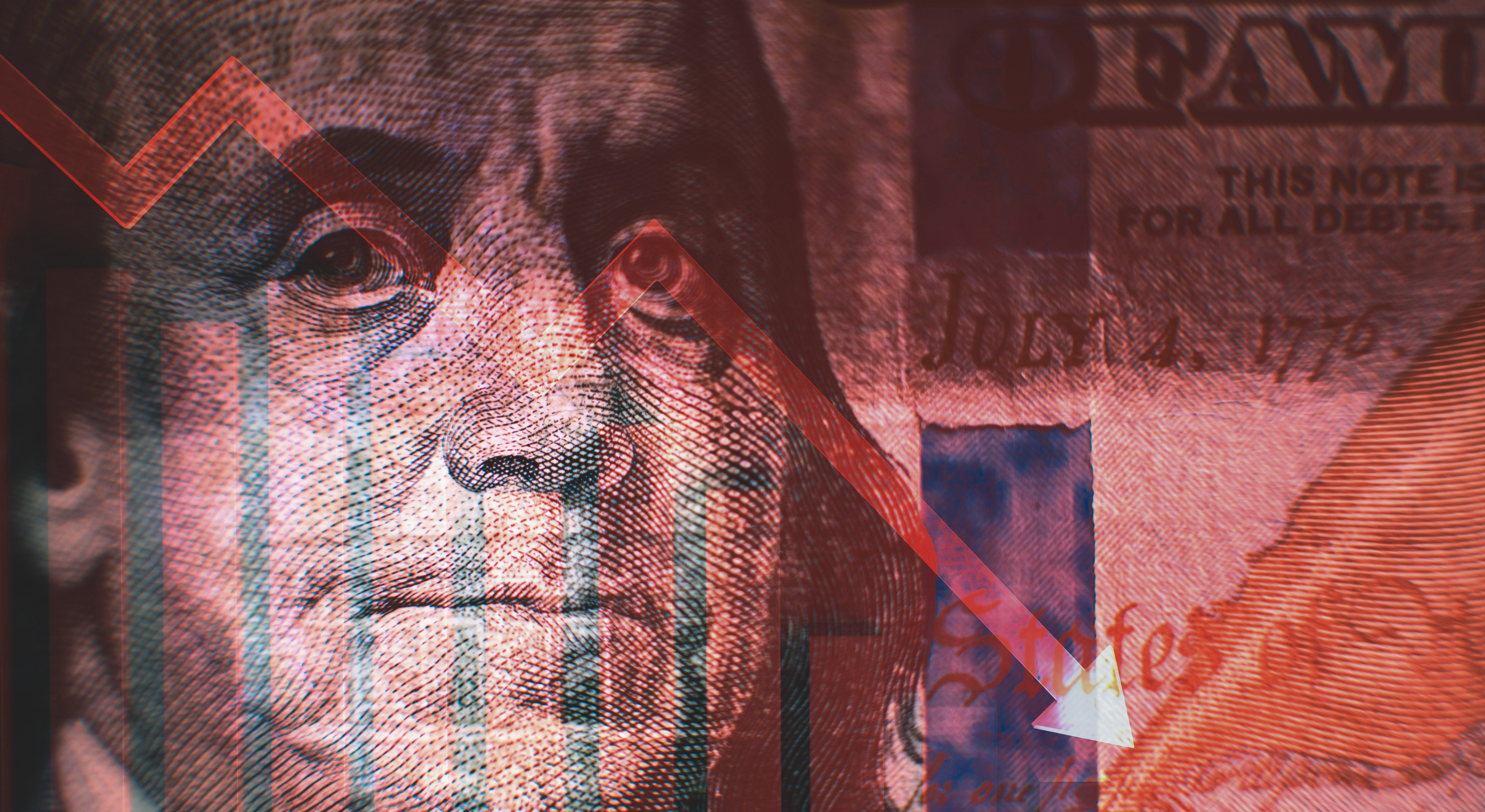
Something unprecedented is unfolding in the global financial system right now, and most Americans have no idea how serious this situation has become.
The US dollar is experiencing its worst six-month period since 1973. That's fifty-two years ago, over half a century. The numbers are stark and undeniable.
The US dollar has fallen approximately 10 to 11 percent in the first half of 2025 alone.
But what's most concerning about this is that it's not a temporary dip or a normal market fluctuation. It's not happening because of a sudden crisis or unexpected event. This is a slow, steady erosion that appears to have no end in sight.
The Dollar Index Tells a Troubling Story
The DXY, which measures the dollar against a basket of major currencies, has plummeted from around 110 in January to around 98, where it's currently sitting. What makes this situation even more alarming is that it's happening despite the Federal Reserve telling us we're in a period of relatively "stable" monetary policy. Because if we're to believe that, then it means something fundamental has changed in how the world views the dollar.
For those paying attention, the foundation of dollar dominance has been cracking for years. But 2025 is the year those cracks are becoming impossible to ignore. Notably, Saudi Arabia announced it would accept Chinese yuan for oil sales back in March. Which marked the end of the "petrodollar" system that has underpinned American global financial power since 1974.
But Saudi Arabia is just one piece of a much larger puzzle. Brazil and China completed a $20 billion trade deal entirely in their own currencies in February. India and Russia have been settling oil trades in rupees and rubles since 2024. The United Arab Emirates is now accepting yuan, rupees, and even digital currencies for oil transactions.
The BRICS Alternative Is Already Here
The BRICS nations have stopped talking and started building alternatives. The "BRICS Bridge" payment system went live in April, allowing instant cross-border settlements without touching the dollar. Dozens of countries have already expressed interest in joining this system. And these nations collectively represent almost half of the global population and over 40 percent of global GDP. That's a big deal.
This isn't some distant threat on the horizon. It's happening right now, in real time, and it's accelerating. Every week brings new announcements of countries diversifying away from the dollar, new bilateral trade agreements that bypass American currency, new infrastructure being built to facilitate a post-dollar world.
America's Debt Crisis Reaches a Breaking Point
The United States is also facing a debt crisis that can no longer be ignored. Our national debt is now over $37 trillion. And considering our debt-to-GDP ratio is upwards of 120%, and our government refuses to cut spending in any meaningful way, it's most likely that the government's only option to manage this ballooning debt is by further money printing to ease the burden.
As Ray Dalio, founder of Bridgewater Associates, the world's largest hedge fund, recently explained: "Historically when there was too much debt to be paid back with the money that existed, central banks printed money to pay back the debt. This devalued it."
He warns that the biggest risk is that debt assets like US Treasuries will "either be defaulted on or devalued, more likely devalued."
That's why countries like China have been quietly reducing their Treasury holdings, dumping over $300 billion since 2024. Japan, traditionally America's most reliable buyer of US debt, has slowed purchases dramatically. Even European central banks are diversifying away from dollar-heavy reserves.
The dollar's value has always been backed by more than just economics. It's been backed by trust in American stability, American institutions, and American power. That trust is eroding at an accelerating pace.
When foreign governments look at America's political dysfunction, its inability to address fiscal problems, and its weaponization of the dollar through sanctions, they're making rational decisions to reduce their exposure.
Gold's Magnificent Bull Run
This is where gold enters the picture, and why 2025 has been such a remarkable year for the precious metal. While the dollar has been collapsing, gold has been on a magnificent bull run. It's not a coincidence. Gold is reasserting its role as the only real money, as it has been for thousands of years.
Ray Dalio explains it like this: most people make the mistake of thinking of gold as a metal rather than as the most established form of money. Unlike cash and fiat currency, which can be printed and devalued, gold can't be printed or devalued.
Central banks around the world understand this, which is why they've been buying gold at record levels. China has been accumulating gold reserves aggressively. Russia has been converting dollar reserves into gold. European and emerging countries are stockpiling gold as fast as possible.
These aren't unsophisticated investors making emotional decisions. These are the world's most powerful financial institutions making calculated moves to protect their wealth.
Because of this strong demand, banks like JPMorgan and Bank of America are predicting gold could skyrocket to anywhere from $6,000 to $10,000 in the current economic environment.
As the dollar continues to weaken, as more countries move away from dollar-based trade, as trust in paper currencies erodes, gold becomes increasingly valuable. It's not that gold is going up in some abstract sense. It's that gold is maintaining its purchasing power while the dollar continues to decline.
The Case for Gold in Your Retirement Portfolio
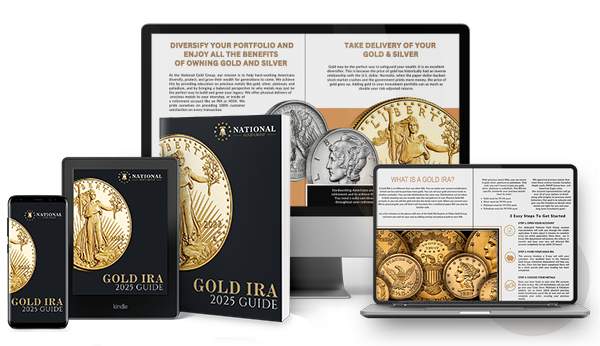
Many Americans don't realize that you can hold gold inside your retirement accounts. A Gold IRA allows you to rollover funds from existing 401(k) plans, traditional IRAs, or other retirement accounts into physical gold and other precious metals, all while maintaining the same tax advantages. And that's not to say that you have to abandon traditional investments entirely. It's about diversification and protection.
If you're sitting on a retirement account that's 100% in stocks, bonds, and/or cash, you're essentially making a bet that the dollar will stabilize, that America's debt problems will be solved, that foreign countries will return to using the dollar for trade, and that the financial system will return to the way it was. That's a lot of assumptions to stake your retirement on.
Because if nothing happens and the economy recovers, well then, your gold still has its value. Nothing lost. But if the economy gets worse and the markets crash, then your retirement savings could get wiped out. A lot lost.
That's why Ray Dalio, arguably the smartest and most successful hedge fund investor alive, says everyone should put at least 10-15% of their portfolio into gold. JPMorgan says make it 20%.
No matter which number you choose as the right amount, it's clear that you should be putting some of your savings into gold. Because it protects your downside in an ever-more-clearly crumbling economy.
The Multi-Currency Future Is Already Here
We're living through a historic shift in the global financial system. The dollar's dominance, which has been a fact of life for 80 years, is ending. Not overnight, but unmistakably.
The world is moving toward a multi-currency system, and in that system, gold is reasserting its role as the ultimate store of value.
Central banks know it.
Wealthy investors and institutions know it.
Our own government knows it.
The question is, are you prepared for it?
The evidence is overwhelming. The dollar is in its worst decline in over half a century. The petrodollar system that underpinned American financial power has ended. The BRICS nations are building alternative payment systems that bypass the dollar entirely. America's debt has reached unsustainable levels with no political will to address it. Foreign countries are dumping Treasury holdings and buying gold instead.
This isn't speculation or fear-mongering. These are documented facts, happening in real time, reported by mainstream financial institutions and central banks around the world. The question isn't whether the dollar's dominance is ending. The question is how quickly it will happen, and whether you'll be prepared when it does.
Gold has survived every empire, every currency, every financial system that has ever existed. It's not a new invention or a trendy investment. It's the oldest form of money humanity has ever known, and it's proving once again why it has endured for thousands of years.
While paper currencies come and go, while governments rise and fall, while financial systems collapse and rebuild, gold maintains its value.
Taking Action to Protect Your Future
At National Gold Group, it's our mission to help hard-working Americans diversify and protect their retirement savings with gold and other precious metals.
With over 25 years of experience and a 4.9 rating across multiple third-party review sites like Trustpilot and Google, we're here to help you with transparent and no-hassle advice.
The time to act is now. Don't wait until the dollar's decline becomes undeniable to everyone.
Contact National Gold Group today to learn how easy it is to add the security of physical gold to your retirement portfolio.
-1.png)