
BofA’s Hartnett Sees $6,000 Gold by Next Spring Amid Rising ‘Debasement Trade’
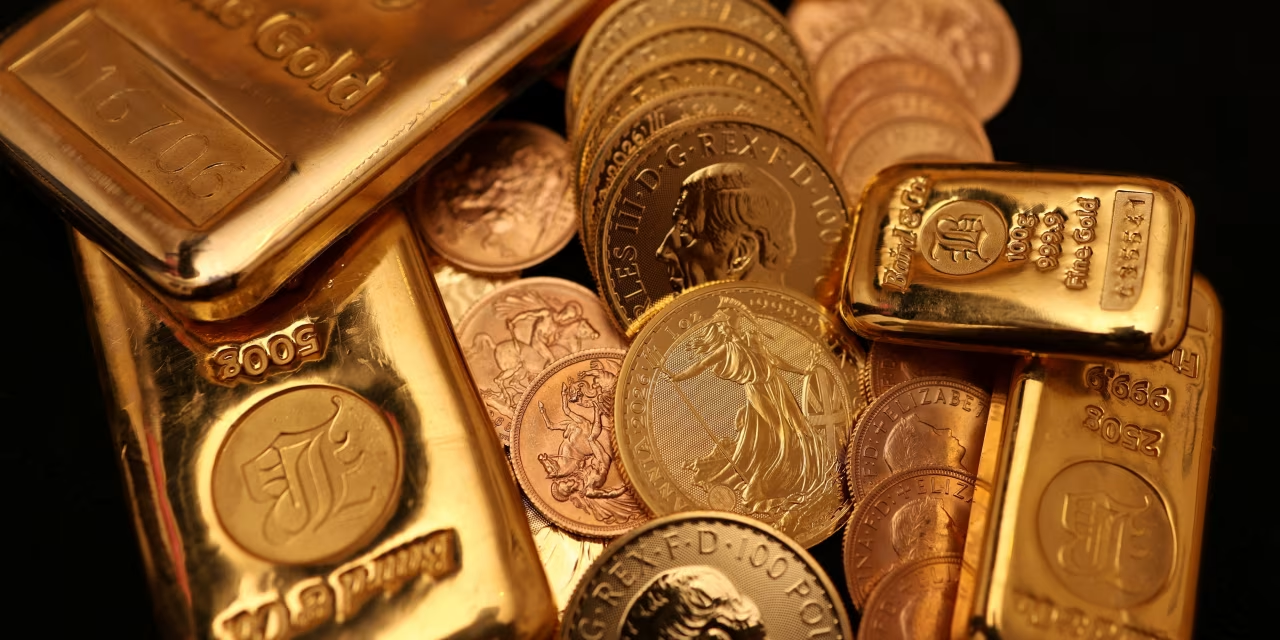
Bank of America strategist Michael Hartnett believes gold could surge to $6,000 per ounce by spring 2026, fueled by what he calls a powerful “debasement trade” as investors brace for currency erosion, policy excess, and leadership changes at the Federal Reserve.
In a note citing EPFR Global data, BofA reported that money market funds captured the bulk of inflows last week, lifting total cash assets to $7.4 trillion. Cash funds attracted $72.9 billion, while bond funds drew $25.6 billion, stocks $20 billion, crypto $5.5 billion, and gold $2.1 billion during the week ended October 8.
Gold saw its smallest inflow in three weeks, but Hartnett said structural positioning in the metal remains light — a setup that could magnify future gains if investors rush back in. He pointed to several potential catalysts, including speculation about a new Fed Chair, renewed boom-and-bubble fiscal policies, and the possibility of a formal gold revaluation, echoing historic resets in 1934 and 1973.
“History is no guide to the future,” Hartnett wrote, “but the average gold jump across the last four bull markets was roughly 300% in 43 months — which would imply gold reaching $6,000 by next spring.”
Central Banks Now Hold More Gold Than Treasuries
In a landmark shift underscoring Hartnett’s thesis, global central banks’ gold reserves now exceed their U.S. Treasury holdings for the first time in nearly 30 years. The crossover reflects a deliberate move away from dollar-denominated debt toward hard, politically neutral assets.
According to the IMF, gold’s share of global reserves climbed to about 18% in 2024, up sharply from mid-2010s levels, as nations diversify to protect purchasing power. The most aggressive buyers — China, Russia, and Türkiye — have led this multi-year accumulation trend.
The result: as geopolitical risks mount and faith in fiat currencies wanes, the same “debasement trade” driving central bank policy has also pushed gold to record highs above $4,000 an ounce in October 2025.
Why It Matters
Crossing above Treasuries marks more than symbolism — it shows reserve managers increasingly prioritizing durability, portability, and neutrality over yield. And if Hartnett’s view proves right, the world may be entering a new monetary era where gold, once again, becomes the ultimate benchmark for value.