JPMorgan Predicts Gold Could Hit $6,000 by 2029
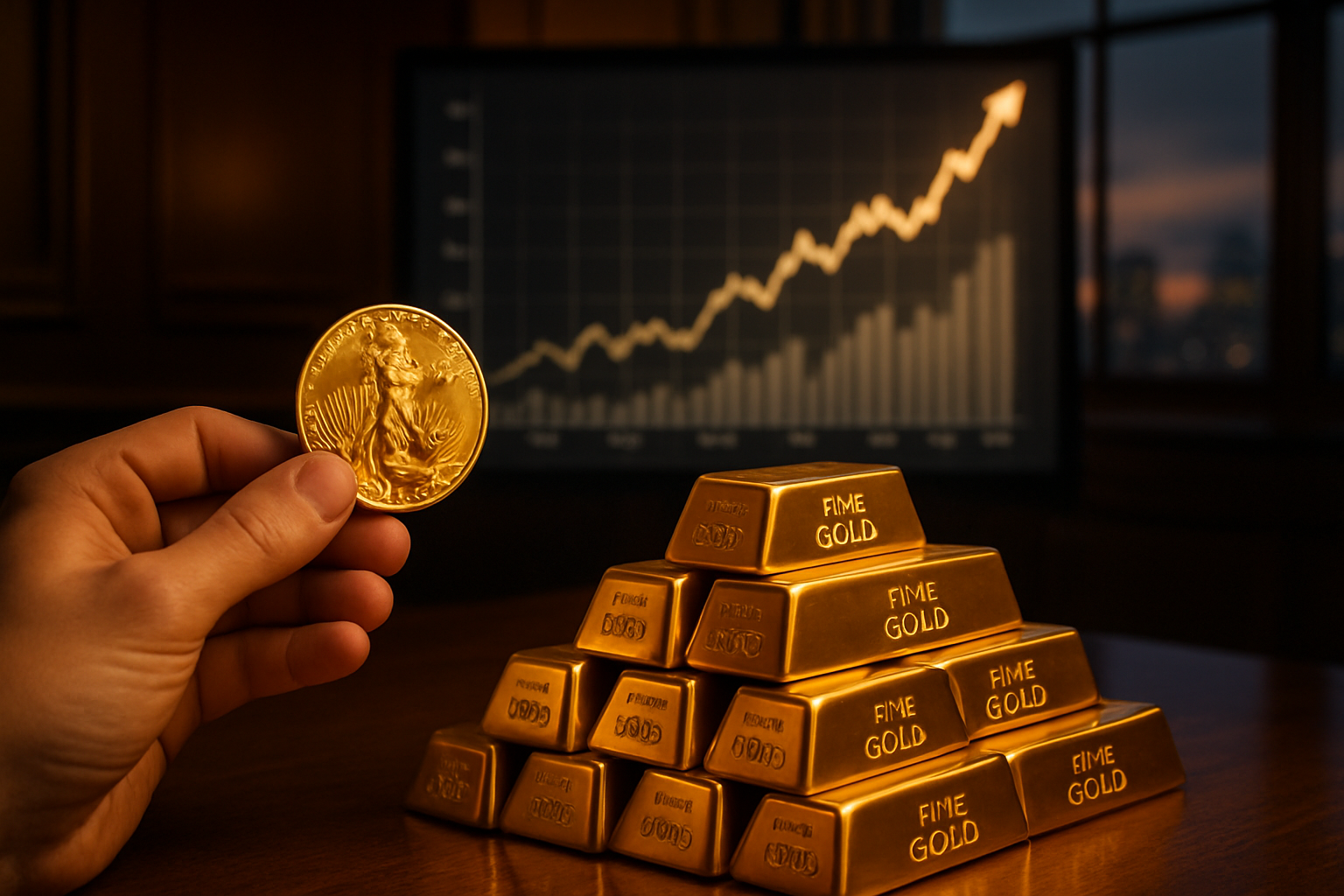
You don't often see Wall Street's biggest banks make predictions this bold.
JPMorgan just went on record saying gold could hit $6,000 per ounce by the end of 2029. That's an 80% increase from where we are today, with gold already trading near record highs of nearly $4,000 per ounce.
Think about that for a moment. One of the most conservative financial institutions in the world is telling investors that gold has room to nearly double in the next four years.
Why JPMorgan Is Bullish on Gold
What's driving this forecast? It's not speculation or hype. It's math, and it's based on something happening right now that most Americans aren't paying attention to.
According to JPMorgan's analysis, if just 0.5% of foreign-held U.S. assets were reallocated to gold, that would create an inflow of $273.6 billion into precious metals over four years. That's roughly 2,500 metric tons of gold.
While that might sound like a small percentage, the bank's analysts point out that the supply of gold is relatively stable, meaning even a modest increase in demand creates significant price movement.
"While hypothetical, this scenario illustrates why we remain structurally bullish on gold and think prices have further to run," JPMorgan analysts wrote in their recent note.
Central Banks Are Buying Gold at Record Levels
The reason this matters to retirement savers is simple. Foreign investors are starting to question the safety of holding U.S. dollar-denominated assets.
We're seeing central banks around the world doubling their gold reserves over the past three years, jumping from an average of 400 to 500 tons per year to over 1,000 tons annually, according to the World Gold Council. These aren't amateur investors making emotional decisions.
These are the financial stewards of entire nations, and they're moving their money into gold at a pace we haven't seen in decades, or perhaps ever.
Gold's 2025 Performance: Up Nearly 50%
Right now, gold has already surged nearly 50% year to date. It started 2025 at around $2,669 per ounce and has climbed past $3,950 as of October 2025.
That's not a bubble. That's a response to real economic conditions that are making traditional assets less attractive and gold more essential.
The Weakening Dollar and Rising Gold Prices
Consider what's happening with the U.S. dollar. The dollar index has declined more than 10% over the past nine months, and major credit rating agencies have downgraded the U.S. government's credit rating.
When the dollar weakens, it takes more dollars to buy the same amount of gold, which pushes prices higher.
But here's what's interesting: gold is also becoming more expensive in euros, yen, and other currencies, which tells us this isn't just about dollar weakness. There's something fundamentally different happening in how investors worldwide view gold as a store of value.
Economic Uncertainty Driving Gold Demand
The economic uncertainty we're experiencing isn't going away anytime soon.
We have:
- Rising national debt that continues to climb with no clear path to pay it
- Geopolitical tensions that show no signs of easing
- Government shutdowns delaying key economic data releases
- Credit rating downgrades for U.S. government debt
- Foreign investors reconsidering their relationship with U.S. assets
JPMorgan specifically cited the current administration's approach to "burden sharing" by other countries that benefit from the dollar's reserve currency status as a factor putting foreign investors on notice.
Why Gold Is Different from Stocks and Bonds
This isn't about politics. This is about protection.
When you have your retirement savings sitting in a 401k, IRA, or TSP plan that's entirely dependent on the performance of stocks and bonds, you're exposed to all of this volatility.
You're betting that the dollar maintains its strength, that the stock market continues its upward trajectory, and that the economic policies coming out of Washington don't disrupt the financial system in ways that hurt your nest egg.
Gold's Unique Properties as an Investment
Gold offers something different:
- Not correlated with traditional markets – When stocks and bonds struggle, gold typically performs well. In fact, gold has outperformed the S&P 500 and Dow Jones since 2000.
- No credit risk – Gold is a tangible asset that doesn't depend on any institution's promise to pay, which makes it a hedge against the rising national debt.
- Can't be devalued by a central bank printing more currency, which is the opposite of the dollar that's lost over 97% of it's purchasing power since 1913.
- Intrinsic value recognized for thousands of years across every civilization and culture, and has survived through every empire and currency.
- Highly liquid – Standardized weight and purity make it easily tradable worldwide, which is why gold can easily be liquidated into any currency in any country.
Smart Investors Are Diversifying with Gold
The World Gold Council reports that the largest driver of gold demand this year has been investors, ranging from family offices to high net worth individuals, all looking to diversify their portfolios.
Financial advisors typically recommend allocating anywhere from 10% to 20% of a portfolio to gold, with the average being around 15%. That's not putting all your eggs in one basket. That's smart diversification that gives you exposure to the 2nrd highest performing asset of the century (only beat by REITs, which are much more complicated than owning gold).
The Timeline: When Could Gold Reach $6,000?
What makes this moment particularly compelling is that we're still in the early stages of this trend.
JPMorgan's forecast of $6,000 gold by 2029 assumes continued but modest reallocation away from U.S. assets. If economic conditions worsen, if geopolitical tensions escalate, or if confidence in the dollar deteriorates further, that timeline could accelerate.
How to Invest in Gold for Retirement
The question isn't whether gold will continue to rise. The question is whether you're positioned to benefit from it.
If you're sitting on retirement savings that are entirely in cash-backed assets, you're making a choice to remain fully exposed to the risks we've been discussing. Every day that passes with gold setting new records is a day that your purchasing power in dollars is declining.
Popular Gold Investment Options
There are several ways to add gold to your retirement portfolio:
- Gold IRA – A self-directed IRA that holds physical gold, silver, platinum, or palladium
- Physical gold bars and coins – Direct ownership of precious metals
- Gold ETFs – Exchange-traded funds that track gold prices
- Gold mining stocks – Equity in companies that produce gold
For retirement savers, a Gold IRA is often the most tax-advantaged option, allowing you to roll over funds from an existing 401k, IRA, TSP, or other qualified retirement account, into physical precious metals without triggering a taxable event.
Take note that while gold ETFs and gold mining stocks are popular options, they are not the same as owning real, physical gold. There's still a counter-party risk with ETFs and stocks.
So even if you do opt to invest in an ETF or stock, billionaires like Ray Dalio say that you should still allocate a portion of your portfolio to buying physical gold.
Why Americans Over 55 Are Turning to Gold
This is why so many Americans over 55 are taking a serious look at gold IRAs and other precious metals investments. They've worked their entire lives to build their retirement savings, and they're not willing to gamble it all on the hope that the economic and political environment stabilizes.
They want:
- Protection from economic volatility
- Diversification beyond stocks and bonds
- An asset that has proven its ability to preserve wealth
Protect Your Retirement with Gold
At National Gold Group, our mission is to inform and educate Americans about investing in gold and other precious metals, and present you with no-pressure options that are unique to your goals.
With over 25 years of experience and a 4.9 rating across multiple third-party review sites like Trustpilot and Google, we're here to help you with transparent and no-hassle advice.
Take the Next Step
If you're interested in learning how gold can protect and diversify your retirement savings, we invite you to speak with one of our precious metals specialists. We'll answer your questions, explain your options, and help you determine if gold is right for your financial goals.
Call National Gold Group today or request a free information kit to learn more about:
- Gold IRA rollovers
- Physical gold and silver purchases
- Current precious metals pricing
- Tax advantages of gold IRAs
- Storage and security options
Don't wait until gold reaches $6,000 per ounce to take action. The best time to diversify your portfolio is before the next crisis hits, not during it.
Frequently Asked Questions About Gold Investing
Is gold a good investment in 2025?
With gold up nearly 50% year-to-date and major banks like JPMorgan forecasting continued growth, many financial experts view gold as an essential diversification tool for retirement portfolios, especially during times of economic uncertainty.
How much of my portfolio should be in gold?
Financial advisors typically recommend allocating 2-10% of your portfolio to gold, with 5% being the average. This provides meaningful diversification without overexposure to any single asset class.
Can I put gold in my IRA?
Yes. A self-directed gold IRA allows you to hold IRS-approved physical gold, silver, platinum, and palladium in a tax-advantaged retirement account. You can roll over existing 401k, IRA, or TSP funds without penalties.
What is driving gold prices higher?
Multiple factors are driving gold demand: central bank buying, dollar weakness, geopolitical uncertainty, rising national debt, inflation concerns, and foreign investors diversifying away from U.S. dollar-denominated assets.
When will gold reach $6,000 per ounce?
JPMorgan forecasts gold could reach $6,000 by 2029, though some analysts believe it could happen sooner if economic conditions deteriorate or foreign investment in U.S. assets continues to decline.