
CRFB Warns: This 'Economic Sugar High' Won't Last
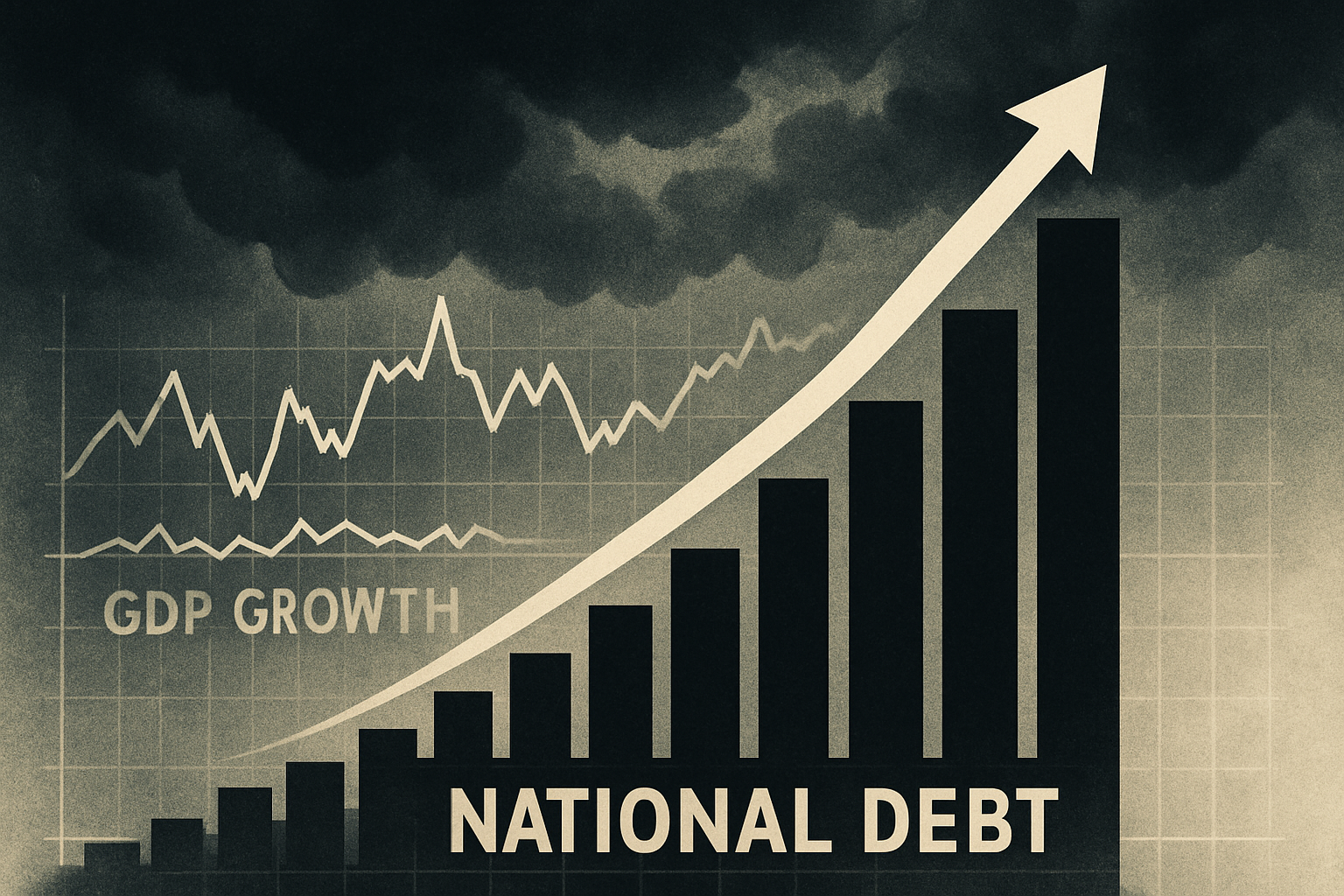
The Committee for a Responsible Federal Budget has issued a stark warning that should concern every American with retirement savings. In their latest analysis, they describe the current economic environment as an "economic sugar high" that's masking deeper structural problems in the U.S. economy. This temporary boost, driven by massive government borrowing, is setting the stage for what many experts believe could be a period of stagflation not seen since the 1970s.
Understanding the One Big Beautiful Bill Act's True Cost
The recently enacted One Big Beautiful Bill Act (OBBBA) is projected to require the government to borrow $600 billion annually from 2026 through 2028. This unprecedented borrowing spree will add approximately $4.1 trillion to the national debt through 2034, according to the nonpartisan budget watchdog's detailed assessment.
While supporters of the legislation argue it will accelerate economic growth, the CRFB's analysis reveals a troubling pattern. The bill will indeed provide a significant boost to economic output in the near term, with growth rates potentially climbing by nearly 1% in 2026. However, this surge is driven by increased demand and one-time incentives that will quickly fade as the economy adjusts.
Historical Parallels: The 2017 Tax Cuts Playbook Repeating
The current situation bears striking similarities to the 2017 Tax Cuts and Jobs Act (TCJA) from the previous administration. That legislation created an initial economic lift, with GDP growing 3% in 2018 and 2.6% in 2019, before reverting to approximately 2.2% growth by 2020.
The CRFB notes that the growth from the 2017 tax cuts "now appears in retrospect to have represented a one-time boost to economic activity rather than a sustained increase in the rate of economic growth." The organization warns that the OBBBA follows the same pattern but on a much larger scale, with potentially more severe long-term consequences.
Why Stagflation Fears Are Growing Among Financial Experts
Multiple economic forecasting models are converging on a concerning prediction: the temporary economic boost will be followed by a period of stagnation as rising national debt crowds out investment and exerts downward pressure on long-term growth. The Tax Policy Center and Yale Budget Lab estimates show the OBBBA increasing economic output by 0.7% to 0.9% in 2026, but growth rates quickly reverting afterward.
Some models predict economic output could decline by as much as 0.2% by 2034, creating the perfect conditions for stagflation. This toxic combination of stagnant economic growth and rising inflation devastated traditional investments during the 1970s.
Gold's Emerging Role as the Ultimate Hedge Against Economic Uncertainty
As concerns about stagflation mount, precious metals are attracting unprecedented attention from institutional investors and financial analysts. J.P. Morgan Research has significantly raised their gold price targets, now forecasting prices to average $3,675 per ounce by the fourth quarter of 2025, climbing toward $4,000 by mid-2026.
Their analysts describe gold as "the most optimal hedge for the unique combination of stagflation, recession, debasement and U.S. policy risks facing markets in 2025 and 2026." This assessment isn't based on speculation but on fundamental economic realities already in motion.
Central Bank Gold Purchasing Reaches Historic Levels
Central banks worldwide are responding to these economic uncertainties by dramatically increasing their gold reserves. Forecasts indicate they will purchase approximately 900 tonnes of gold in 2025, marking the third consecutive year of unprecedented buying levels by these sophisticated financial institutions.
These purchases represent strategic decisions by central banks to diversify away from dollar-denominated assets, signaling concerns about the dollar's future purchasing power and stability as the world's reserve currency.
Gold's 2025 Performance Signals Broader Economic Shifts
The World Gold Council reports that gold has outperformed all major asset classes in 2025, rising 26% in the first half of the year alone. The precious metal reached 26 new all-time highs during this period, driven by a weaker dollar, escalating geopolitical tensions, and what the Council describes as "heightened uncertainty" in the global economy.
Gold ETF inflows have been particularly robust, with total assets under management rising 41% to $383 billion. These flows represent more than market sentiment. They reflect mathematical realities about currency debasement and fiscal sustainability.
The Dollar's Purchasing Power Under Pressure
With government borrowing at unprecedented levels, the dollar's purchasing power faces systematic erosion. Trade tensions are creating additional uncertainty, while the foundation of America's economic dominance is being questioned globally. Countries are increasingly challenging the dollar's role as the world's reserve currency, and each challenge weakens its long-term stability.
For Americans with retirement savings in traditional accounts like 401(k)s, IRAs, or TSP plans, this creates a fundamental problem. These accounts typically hold stocks, bonds, and cash-backed assets denominated in dollars. As the dollar weakens and inflation pressures build, the real purchasing power of these savings erodes, even when account balances appear to grow on paper.
Why This Economic Cycle May Be Different
The current environment presents what many experts believe is a generational shift in monetary and fiscal policy. Unlike previous economic cycles, the scale of government borrowing and the precarious state of global trade relationships create compounding risks that traditional hedging strategies may not address effectively.
Gold's unique properties as a store of value become particularly relevant in this context. Unlike paper assets, gold has maintained purchasing power across thousands of years of monetary upheavals. It operates independently of any government's fiscal responsibility or central bank's monetary policy decisions.
Preparing for Economic Turbulence Ahead
The question facing investors isn't whether economic turbulence is coming, but whether they'll be positioned appropriately when it arrives. Historical analysis shows that the greatest wealth transfers occur during periods of monetary instability, with prepared investors prospering while the unprepared suffer significant losses.
The current economic "sugar high" may feel reassuring in the short term, but the underlying fundamentals suggest a more challenging period ahead. Understanding these dynamics and their implications for different asset classes becomes crucial for anyone seeking to preserve and grow wealth through the coming economic transition.