Gold Prices Climb Back Over $4,000 As Stock Market Stumbles
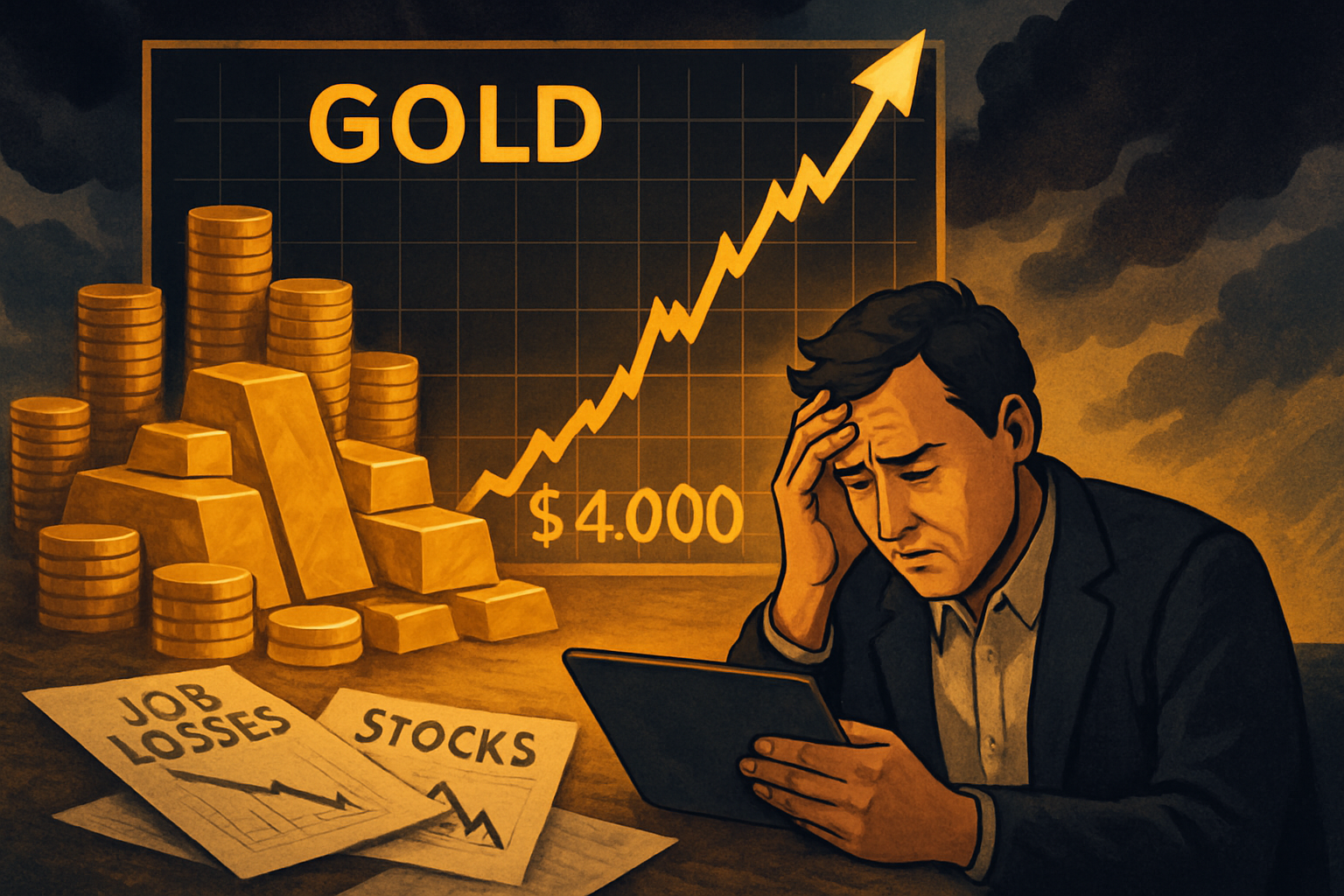
Gold prices surged nearly 2% this week, reaching their highest point in two weeks at over $4,000 per ounce, while the stock market moved in the opposite direction.
The Nasdaq had its worst week since April, and both the S&P 500 and Dow Jones ended their three-week winning streaks.
This divergence between gold prices and stock market performance is capturing the attention of investors and financial analysts alike. With experts now predicting gold could hit $5,000 per ounce within the next 12 months, understanding what's driving this shift has become critical for anyone concerned about protecting their retirement savings.
Why Are Gold Prices Rising Now?
The recent surge in gold prices isn't happening in a vacuum. Several economic factors are converging to make gold more attractive to investors seeking safety and stability.
Weak Economic Data Fuels Gold Demand
Recent economic data has painted a concerning picture of the U.S. economy. Job losses increased in October, particularly in government and retail sectors. Consumer confidence dropped to its lowest level since June 2022, when inflation was at its worst in 40 years.
Perhaps most striking, a University of Michigan survey found that Americans' assessment of current economic conditions reached the lowest point in the survey's entire 73-year history. This kind of pessimism typically drives investors toward safe-haven assets like gold.
Dollar Weakness Boosts Gold Appeal
The U.S. dollar weakened this week, which directly impacts gold prices. When the dollar loses value, gold becomes more attractive for several reasons.
First, gold is priced in dollars, so a weaker dollar makes gold cheaper for international buyers, increasing demand.
Second, when the dollar loses purchasing power, gold maintains its value as a store of wealth.
This relationship between the dollar and gold prices is one reason why central banks around the world have been buying gold at record levels in recent years.
Federal Reserve Rate Cut Expectations
Markets are now pricing in a 65% chance that the Federal Reserve will cut interest rates again in December. While rate cuts might sound positive, they're typically implemented when the Fed is concerned about economic weakness.
How Rate Cuts Affect Different Investments
Interest rate cuts have varying impacts on different types of investments:
Savings Accounts and CDs: When rates fall, the interest earned on savings accounts and certificates of deposit decreases, reducing returns for conservative savers.
Bonds: Existing bonds become less valuable when rates drop, as newer bonds offer lower yields.
Stocks: Lower rates can sometimes support stock prices, but they also signal economic concerns that can create volatility.
Gold: Because gold doesn't pay interest, it doesn't compete with interest-bearing investments. When rates fall and the dollar weakens, gold often becomes more attractive as a store of value.
Government Shutdown and Economic Uncertainty
The recent 40-day government shutdown added another layer of economic uncertainty. White House economic adviser Kevin Hassett warned that fourth-quarter economic growth could turn negative if shutdowns continue.
These disruptions shake investor confidence and highlight the fragility of economic stability. When political dysfunction threatens economic growth, investors typically seek assets that aren't dependent on government stability or policy decisions.
Expert Predictions: Gold Could Hit $5,000
Analysts at Saxo Bank are projecting that gold could approach $5,000 per ounce within the next 12 months, with silver potentially reaching $65 per ounce in the same timeframe.
Ole Hansen, commodities strategist at Saxo Bank, told Bloomberg that "rising yields driven by fiscal anxiety, rather than economic strength, have historically been supportive for investment metals."
These aren't speculative predictions. They're based on concrete factors including:
- Rising national debt levels
- Persistent government spending
- Federal Reserve monetary policy
- Global economic uncertainty
- Central bank gold purchases
- Dollar weakness concerns
Why Gold Performs Well During Economic Uncertainty
Gold has served as a store of value for thousands of years, and its performance during periods of economic stress demonstrates why it remains relevant today.
Gold's Unique Characteristics
No Counterparty Risk: Unlike stocks or bonds, gold isn't a promise from a corporation or government. It's a physical asset with intrinsic value.
Limited Supply: Gold cannot be printed or created at will, unlike fiat currencies. This scarcity helps maintain its value over time.
Global Recognition: Gold is recognized and valued worldwide, making it a truly international asset.
Inflation Hedge: Throughout history, gold has maintained its purchasing power even as currencies have been devalued.
Historical Performance During Crises
Gold has consistently performed well during periods of economic uncertainty, currency devaluation, and market volatility. When consumer confidence drops to historic lows and job losses mount, gold typically holds or increases its value while other assets decline.
The Current Economic Landscape
Understanding the broader economic context helps explain why gold is attracting increased attention from investors.
Rising National Debt
The U.S. national debt continues to grow regardless of which political party controls government. This persistent debt accumulation raises concerns about long-term dollar stability and the government's ability to meet its obligations without further currency devaluation.
Consumer Sentiment at Historic Lows
When consumer confidence reaches 73-year lows, it signals deep concerns about economic conditions. Consumers drive approximately 70% of U.S. economic activity, so their pessimism can become self-fulfilling as they reduce spending.
Job Market Concerns
October's job losses, particularly in government and retail sectors, suggest economic weakness that could spread to other industries. A weakening job market typically precedes broader economic slowdowns.
Stock Market Volatility vs. Gold Stability
This week's market action illustrated a classic pattern: stocks falling while gold rises. The Nasdaq's worst weekly performance since April coincided with gold reaching two-week highs.
Tech Stock Vulnerability
Technology stocks, which have driven much of the market's gains in recent years, are particularly vulnerable to valuation concerns. When investors question whether high stock prices are justified, they often rotate into safer assets.
The Flight to Safety
When economic data weakens and market volatility increases, investors engage in what's called a "flight to safety." They move money out of riskier assets like stocks and into safer havens like gold, Treasury bonds, and cash.
What This Means for Retirement Savings
For Americans over 55 with retirement savings in 401(k) plans, IRAs, or other accounts, the current economic environment presents both challenges and opportunities.
Risks of Concentrated Portfolios
Most retirement accounts are heavily weighted toward stocks and bonds. While this approach works well during stable economic periods, it creates vulnerability when:
- Stock markets experience significant corrections
- Interest rates change rapidly, affecting bond values
- The dollar weakens, reducing purchasing power
- Economic uncertainty increases volatility
The Case for Diversification
Diversification means spreading investments across different asset classes that don't all move in the same direction. When stocks fall, having assets that hold their value or increase provides portfolio stability.
Gold serves this diversification role effectively because it often moves inversely to stocks and the dollar. When traditional investments struggle, gold typically performs well.
How Gold Fits Into a Retirement Portfolio
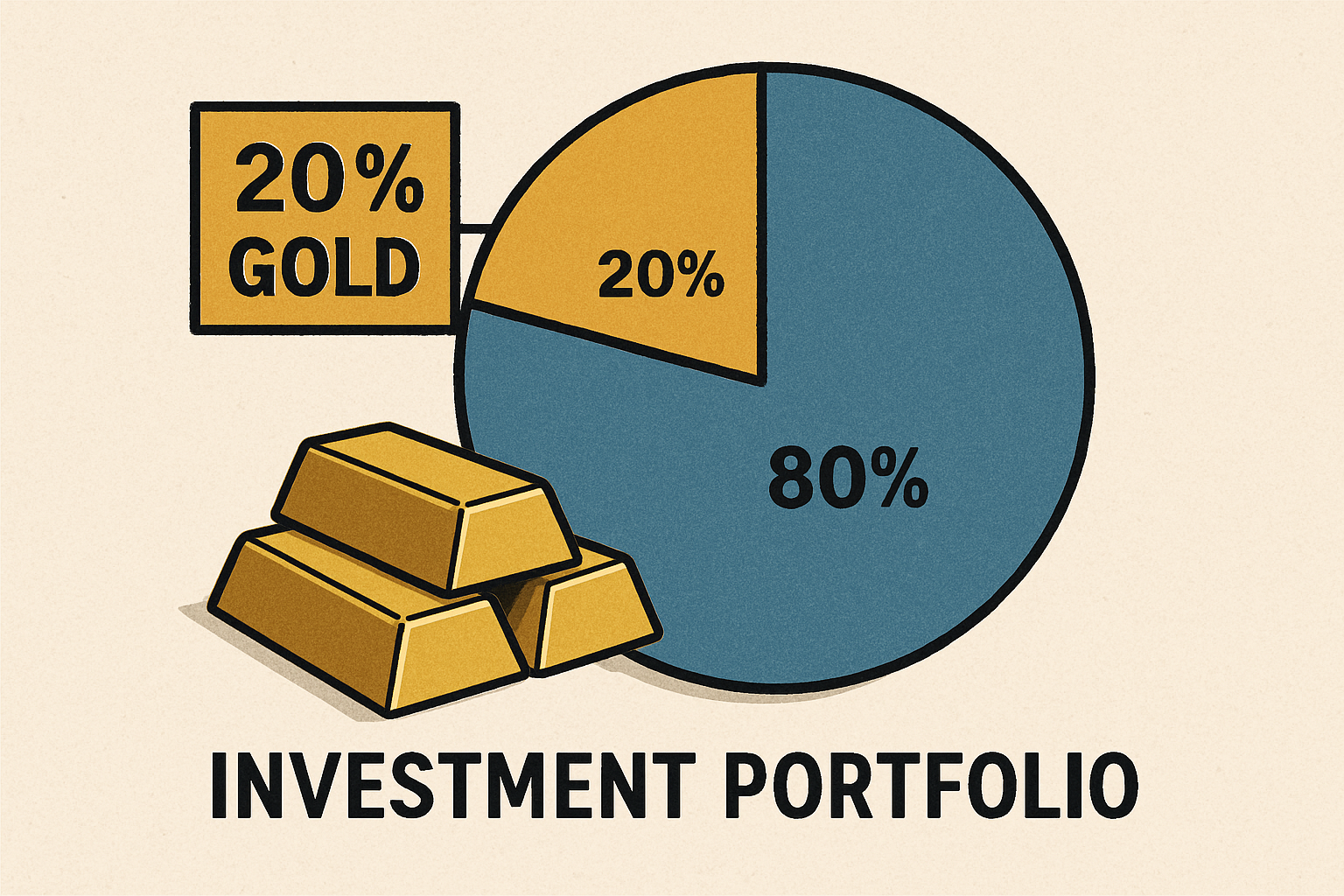
Financial advisors often recommend that investors hold between 5% and 15% of their portfolio in precious metals, depending on their risk tolerance and retirement timeline.
Gold IRA Options
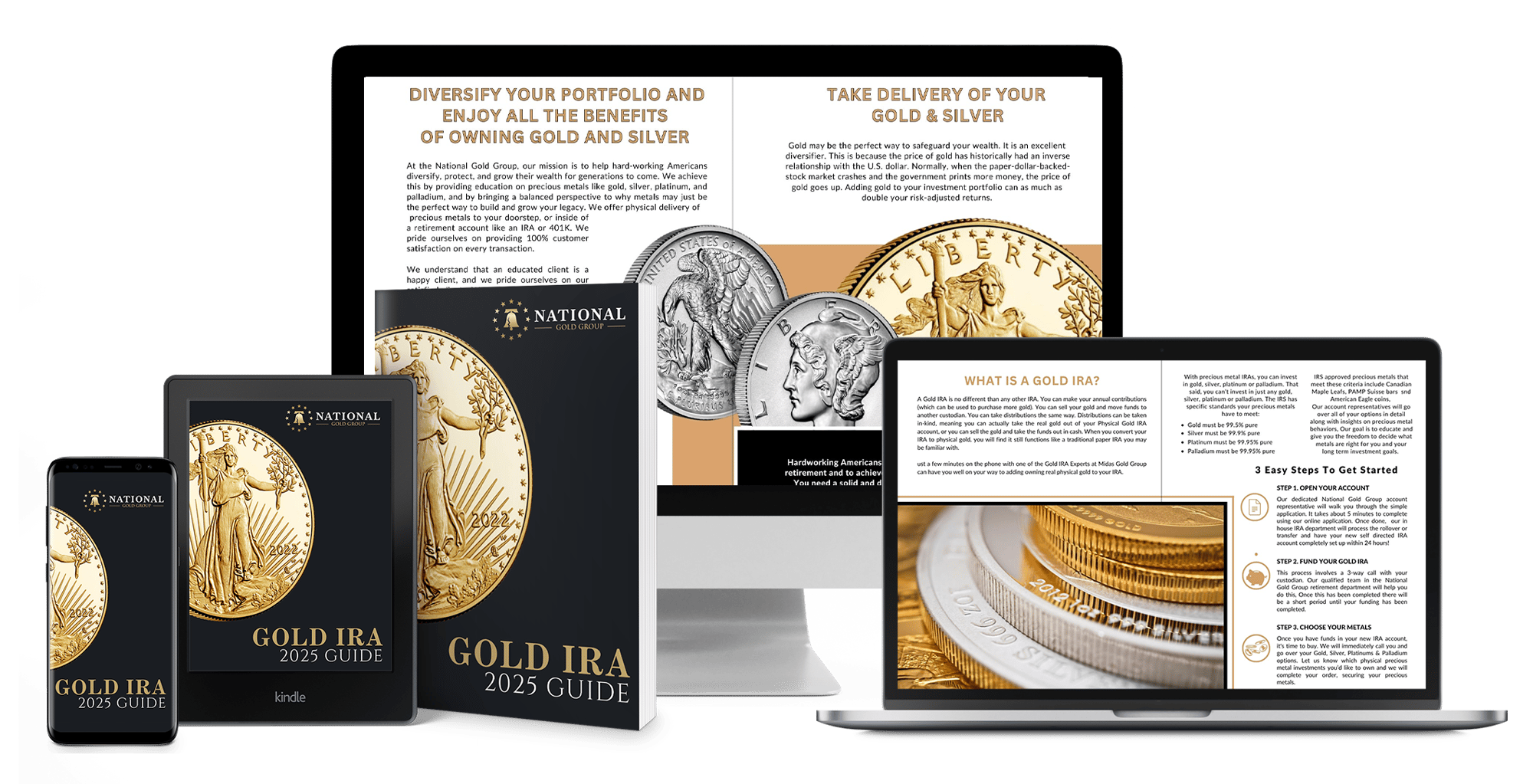
Many investors don't realize they can hold physical gold in their retirement accounts through a Gold IRA. This allows them to gain gold exposure while maintaining the tax advantages of traditional retirement accounts.
Physical Gold vs. Paper Gold
Investors can gain gold exposure through several methods:
Physical Gold: Coins and bars that you own directly, offering maximum security and no counterparty risk.
Gold ETFs: Exchange-traded funds that track gold prices, offering convenience but not physical ownership.
Gold Mining Stocks: Shares in companies that mine gold, offering leverage to gold prices but with additional business risks.
Gold IRAs: Self-directed retirement accounts that hold physical gold, combining tax advantages with direct ownership.
Central Banks Are Buying Gold
One of the most significant trends in recent years has been central bank gold purchases. Countries around the world, including China, Russia, India, and Turkey, have been adding to their gold reserves.
This trend signals that even governments recognize the importance of diversifying away from dollar-denominated assets. When central banks buy gold, they're essentially hedging against currency risk and economic uncertainty.
The Dollar's Role as Reserve Currency
The U.S. dollar has served as the world's primary reserve currency since World War II. However, several countries have been working to reduce their dollar dependence through:
- Bilateral trade agreements in local currencies
- Development of alternative payment systems
- Increased gold reserves
- Creation of regional currency arrangements
While the dollar remains dominant, any erosion of its reserve currency status would likely be positive for gold prices.
Silver Prices Also Rising
It's worth noting that silver prices also jumped this week, rising 3.1% to $49.79 per ounce. Silver often follows gold's direction but with greater volatility.
Analysts predict silver could reach $65 per ounce within the next 12 months, representing significant upside potential from current levels.
What Investors Should Consider Now
The convergence of weak economic data, dollar weakness, rate cut expectations, and government dysfunction creates a compelling environment for gold investment.
Key Questions to Ask
How much of your retirement is in paper assets? If everything is in stocks, bonds, and cash, you have significant exposure to dollar weakness and market volatility.
What happens if the economy continues weakening? Job losses, falling consumer confidence, and potential recession could significantly impact traditional investments.
Are you protected against dollar devaluation? With government debt rising and spending continuing, long-term dollar weakness remains a concern.
Do you have assets that perform well during uncertainty? Gold's historical performance during crises makes it valuable portfolio insurance.
The Bottom Line on Gold Prices
Gold's surge to two-week highs while stocks stumbled isn't a random occurrence.
It reflects investor recognition that economic conditions are deteriorating and traditional investments face increasing risks.
With experts predicting gold could reach $5,000 per ounce within the next year, and with the economic factors supporting higher gold prices showing no signs of reversing, the case for including precious metals in retirement portfolios has strengthened considerably.
The pattern is clear: when consumer confidence hits 73-year lows, when job losses mount, when the dollar weakens, and when government dysfunction creates uncertainty, gold does what it has done for thousands of years. It holds its value and often increases it.
For investors concerned about protecting their retirement savings in an increasingly uncertain economic environment, understanding gold's role as a portfolio diversifier and safe-haven asset has never been more important.
The question isn't whether economic uncertainty will continue. The question is whether your retirement savings are positioned to weather it.
With gold prices rising and traditional investments showing vulnerability, now may be the time to seriously consider how precious metals fit into your long-term financial strategy.