Gold and Silver Backwardation 2026: What It Means for Investors

As we enter 2026, a rare market phenomenon is flashing warning signals across global precious metals markets. Both gold and silver are experiencing backwardation, which is a condition that historically precedes major market disruptions and repricing events.
For investors holding retirement savings in traditional accounts, understanding what's happening right now could mean the difference between preserving wealth and watching purchasing power evaporate.
What Is Backwardation in Gold and Silver Markets?
Backwardation occurs when the spot price (immediate physical delivery) exceeds the futures price (promised delivery months ahead). In normal market conditions, this never happens.
Futures contracts should always trade at a premium to spot prices due to storage costs, insurance, and the time value of money. When this relationship inverts (ie. when buyers pay MORE for immediate delivery than for future promises) it signals a fundamental breakdown in market trust.
Currently, both gold and silver markets are in backwardation.
Silver backwardation has become particularly extreme in London and Shanghai, where physical premiums have spiked to $8 per ounce above spot prices.
Why Backwardation Matters
Backwardation indicates that market participants don't trust they'll receive physical metal if they wait for future delivery.
This lack of confidence stems from a growing awareness that the paper market, particularly gold and silver futures, have written far more claims than physical metal exists to back them.
The Paper vs. Physical Gold and Silver Markets Explained
For decades, precious metals have traded in two parallel markets:
The Paper Market
Banks, hedge funds, and traders exchange futures contracts and derivatives—essentially promises about gold and silver ownership without physical possession. Estimates suggest there are 100 to 500 paper claims for every ounce of physical metal that actually exists.
The paper market is enormous and has historically controlled price discovery. When you see gold or silver prices on financial news, you're seeing paper market prices. This is what traders pay for contracts, not what buyers pay for physical metal.
The Physical Market
This is where actual bars, coins, and bullion change hands. Physical buyers take possession of real metal, stored in vaults or held personally. No counterparty risk, no promises, just tangible assets.
The system has functioned for years on the assumption that most paper holders would never demand physical delivery. But that assumption is breaking down.
Signs the Paper Market Is Breaking Down
Record COMEX Silver Withdrawals
COMEX, the major U.S. commodities exchange where silver trades, recently experienced its largest single-day silver withdrawal in four years. Physical metal is being drained from the system at an accelerating rate.
LBMA Holdings at Historic Lows
The London Bullion Market Association (LBMA), the center of global precious metals trading for over a century, has seen silver holdings collapse to the lowest levels ever recorded. This unprecedented drawdown signals severe physical supply constraints.
Bullion Banks Struggling with Delivery
Major bullion banks including JPMorgan and HSBC are reportedly struggling to meet physical delivery obligations. The LBMA is currently rewriting operational procedures because the system is under stress it wasn't designed to handle.
These institutions have managed paper gold and silver markets for generations. Their current difficulties indicate systemic problems, not temporary disruptions.
Silver Supply Deficit: Five Consecutive Years
Silver has been in supply deficit for five straight years, meaning global consumption exceeds new mining production annually. And this structural imbalance is worsening due to surging industrial demand.
Industrial Silver Demand in 2024-2026
Industrial applications consumed 198 million ounces of silver in 2024 alone, driven by:
- Solar panel manufacturing - Next-generation panels require more silver per unit
- Electric vehicle production - EVs use significantly more silver than traditional vehicles
- AI infrastructure - Data centers and AI hardware require substantial silver
- Medical equipment - Silver's antimicrobial properties make it irreplaceable in healthcare
- Electronics manufacturing - Smartphones, computers, and consumer electronics
This demand is inelastic, meaning manufacturers need silver regardless of price because no substitute performs as effectively.
As industrial consumption grows, less silver remains available for investment demand.
Why Central Banks Are Buying Gold at Record Levels
While retail investors debate market conditions, central banks are acting decisively. According to recent surveys, 95% of central banks plan to increase gold holdings over the next 12 months.
De-Dollarization and Gold Accumulation
Foreign holdings of U.S. Treasuries have fallen to their lowest levels in decades. Countries including China, Russia, India, and Saudi Arabia are simultaneously:
- Reducing U.S. Treasury holdings
- Accumulating physical gold reserves
- Establishing alternative payment systems
- Diversifying away from dollar-denominated assets
This isn't speculation or market timing. It's official policy driven by concerns about U.S. debt sustainability and dollar stability.
The U.S. Debt Crisis and Your Retirement Savings
The U.S. national debt exceeds $38 trillion and is growing by approximately $1 trillion every 100 days. Annual interest payments on this debt now exceed $1 trillion, which is more than the government spends on total military defense.
The Mathematics of Unsustainable Debt
There is no realistic path to repaying this debt through taxation or economic growth.
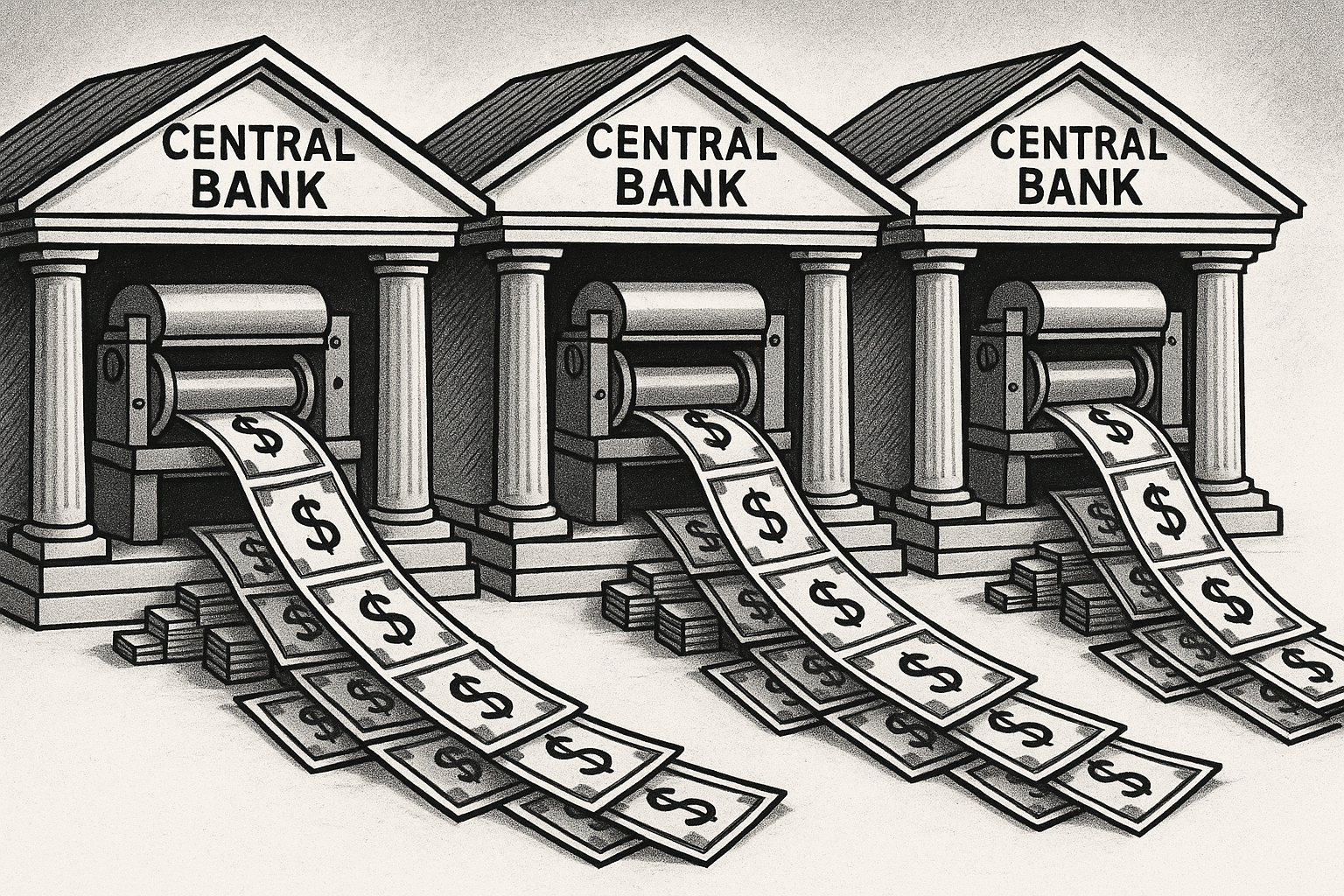
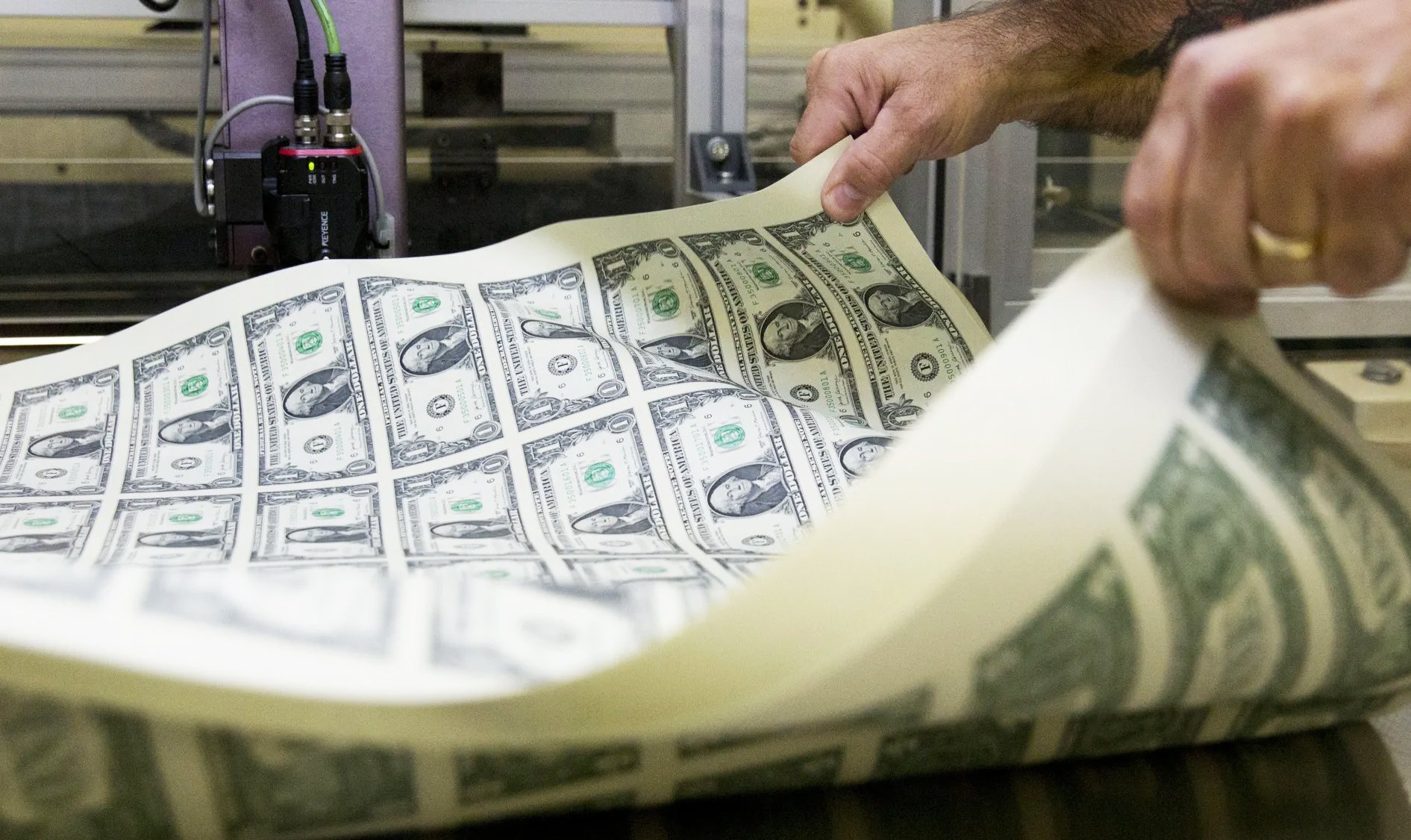
The only viable option is monetary inflation. That means printing more currency to service debt obligations, which simultaneously destroys the purchasing power of existing dollars.
For Americans with retirement savings in 401(k)s, IRAs, or cash accounts, this creates a critical vulnerability. Your account statements show dollar amounts, but those dollars are losing purchasing power at an accelerating rate.
Inflation's Impact on Retirement Planning
If the dollar loses 30-50% of its purchasing power over the next five years, which is a realistic scenario given current debt trajectories, your retirement savings buy proportionally less:
- Healthcare costs increase
- Housing and living expenses rise
- Travel and leisure become more expensive
- Ability to help family members diminishes
The number on your statement may remain stable, but your actual wealth and retirement security decline dramatically.
What Happens When the Paper Market Breaks?
When sufficient investors and institutions demand physical delivery and the system cannot provide it, several things happen simultaneously:
Immediate Price Explosion
Physical gold and silver prices won't rise gradually; they'll explode overnight as the market reprices to reflect actual physical scarcity rather than paper abundance.
Extreme Premiums
Premiums for physical metal will skyrocket as everyone attempts to buy simultaneously. Current premiums of $8/oz on silver could become $20, $50, or higher.
Supply Unavailability
Most critically, physical metal may become unavailable at any price. Owners of physical gold and silver won't want to exchange real assets for rapidly devaluing currency.
The Generational Opportunity in Physical Precious Metals
Right now represents a unique moment in financial history. You can still purchase physical gold and silver at prices reflecting the paper market rather than physical reality.
Why This Window Is Closing
Every day backwardation persists, the gap between paper promises and physical reality widens. Every week that COMEX and LBMA inventories decline brings the system closer to a breaking point.
This opportunity won't exist after the repricing event. Your children and grandchildren won't have access to physical precious metals at current valuations.
Risk/Reward Analysis for 2026
Downside Protection: Gold and silver have intrinsic value, 5,000 years of monetary history, and cannot be printed or created by governments. They preserve purchasing power during currency crises.
Upside Potential: If the paper market breaks as indicators suggest, physical metals could reprice 5-10x or higher while simultaneously protecting against dollar devaluation.
How to Protect Retirement Savings with Physical Precious Metals
Precious Metals IRA Options
You can convert a portion of your 401(k), IRA, or other retirement accounts into a Precious Metals IRA that holds actual physical gold and silver:
- Physical ownership - You own actual metal, not paper claims
- Secure storage - Metal stored in IRS-approved vaults
- No counterparty risk - No bank or institution has claims against your metal
- Tax advantages - Maintains tax-deferred or tax-free status of retirement accounts
Direct Physical Purchases
Beyond retirement accounts, investors can purchase physical gold and silver coins and bars for direct possession or private vault storage.
The Cost of Inaction vs. Action
Cost of Acting Now
Converting a portion of retirement savings into physical precious metals. Potential for significant upside while protecting against downside currency risk.
Cost of Not Acting
Watching purchasing power evaporate as the paper market collapses and physical metal becomes unavailable or unaffordable. No upside potential, complete exposure to downside risk.
What Smart Money Is Doing Right Now
Central banks, billionaires, and institutions with access to the best information and analysis available have been accumulating physical gold and silver for years.
They're not speculating. They're positioning for a fundamental shift in the global monetary system.
The question for individual investors is whether to join them before the window closes or realize too late that paper wealth was just that—paper with nothing backing it.
Key Takeaways: Gold and Silver Backwardation in 2026
- Both gold and silver are in backwardation, signaling breakdown of trust in paper markets
- COMEX and LBMA are experiencing record physical metal withdrawals
- Silver has been in supply deficit for five consecutive years
- Industrial demand for silver is inelastic and growing
- Central banks are buying gold at record levels while dumping U.S. Treasuries
- U.S. debt exceeds $38 trillion with no mathematical path to repayment
- Paper market breakdown could trigger overnight repricing of physical metals
- Current window to buy at paper prices is closing rapidly
- Physical precious metals offer downside protection with significant upside potential
Frequently Asked Questions About Gold and Silver Backwardation
What does backwardation mean in simple terms?
Backwardation means the current spot price for immediate delivery is higher than the futures price for delivery later. This is abnormal and indicates people don't trust they'll receive the metal if they wait.
How long can backwardation last?
Backwardation can persist for weeks or months during periods of extreme market stress. The longer it continues, the more severe the underlying supply problems and the greater the likelihood of a major repricing event.
Is silver a better investment than gold right now?
Silver shows more extreme backwardation and supply constraints than gold, suggesting potentially higher upside. However, both metals serve different roles in a diversified precious metals portfolio. Silver has more industrial demand volatility while gold is the traditional monetary metal.
Can I move my 401(k), IRA, or TSP into physical gold?
Yes, through a Precious Metals IRA rollover. You can convert all or a portion of your 401(k), IRA, TSP or other qualified retirement accounts into a self-directed Precious Metals IRA that holds physical gold and silver in secure storage.
What percentage of retirement savings should be in precious metals?
Financial advisors traditionally recommend 5-10% portfolio allocation to precious metals for diversification. Given current market conditions and debt levels, many investors are increasing allocations to 15-25% or higher for wealth preservation.
Are gold and silver prices going to crash?
The paper market prices could experience volatility, but physical supply constraints, industrial demand, and central bank buying suggest the opposite. In fact, physical prices are likely to rise significantly, especially if the paper market breaks down.
Take Action to Protect Your Retirement Savings
Backwardation in gold and silver markets is sending a clear signal that the decades-long system of paper price control is breaking down. The transition from paper-dominated to physical-dominated markets is happening now.
The window to acquire physical precious metals at paper market prices is closing. Every day of persistent backwardation, every week of declining exchange inventories, every month of central bank gold accumulation brings the system closer to a repricing event that will fundamentally change the precious metals landscape.
For investors concerned about retirement security, dollar devaluation, and wealth preservation, the time to act is now—before the opportunity passes and physical metals become unavailable or unaffordable.