The Fed's Money Printing And The Hidden Job Crisis Could Devastate Retirements In 2026
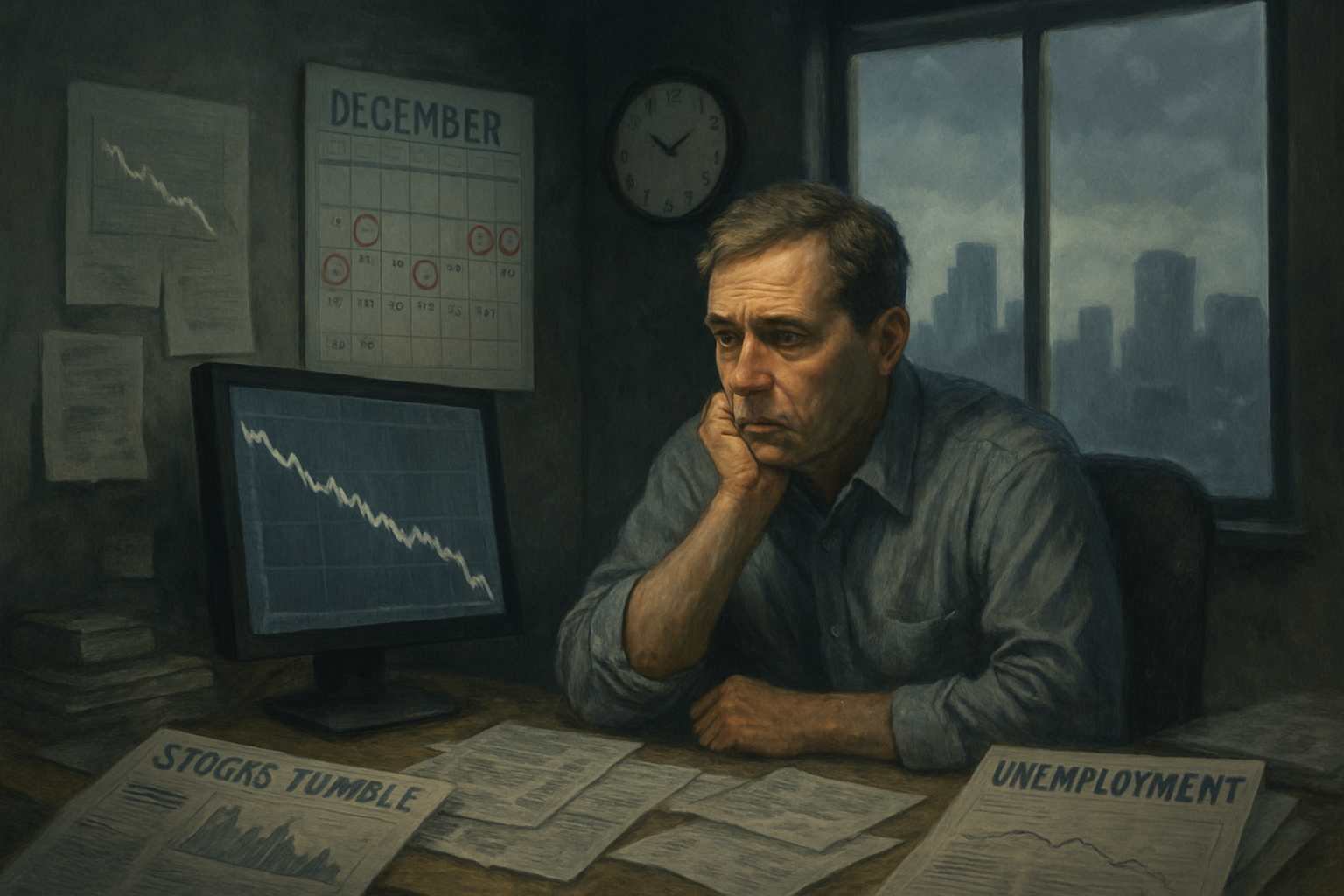
Something critical is unfolding in the U.S. economy right now that could determine whether your retirement savings survive 2026 intact.
While mainstream financial media focuses on stock market records, a perfect storm is brewing that threatens the purchasing power of every dollar in your 401k, IRA, or savings account.
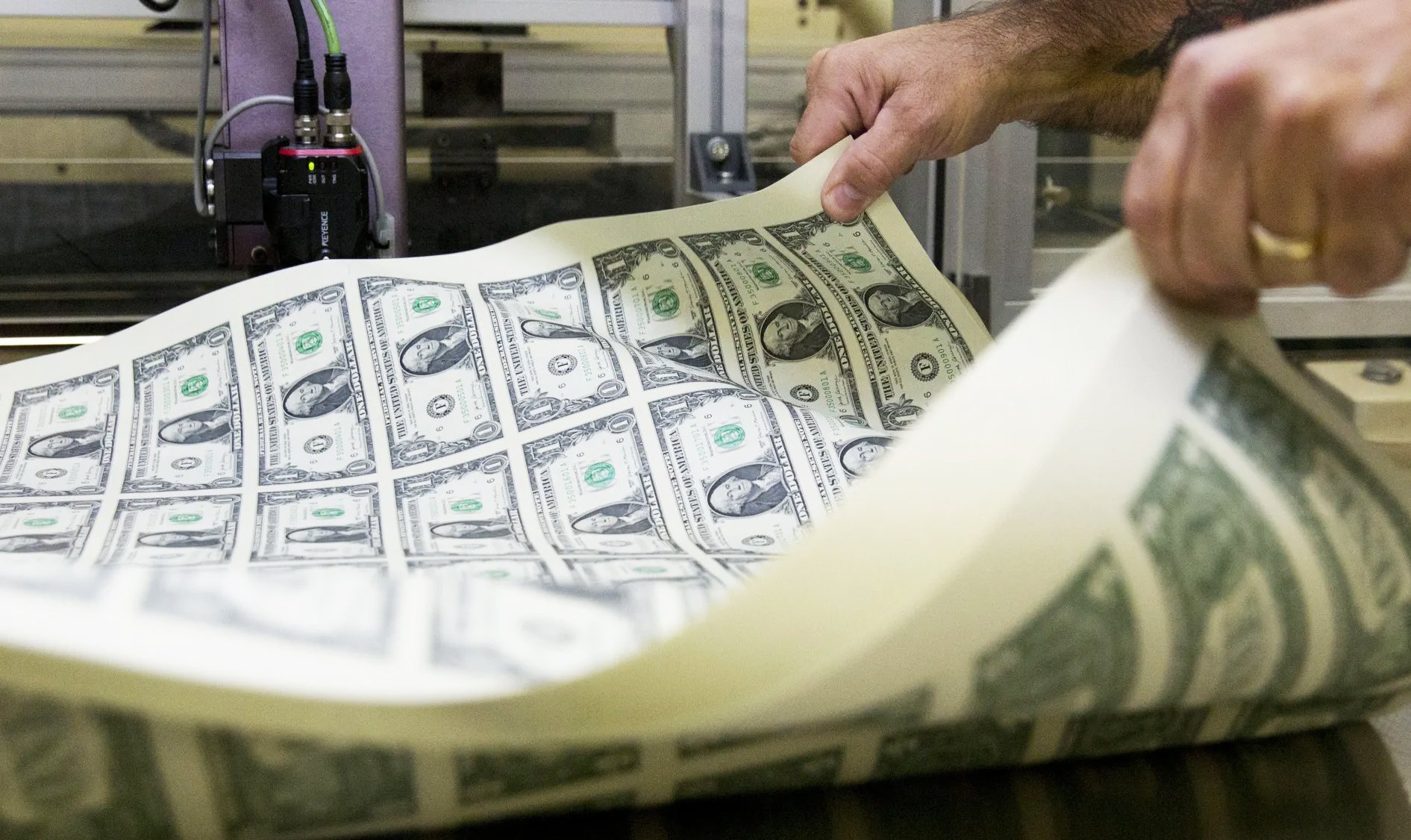
On December 10th, 2025, the Federal Reserve announced a new program to purchase $40 billion in Treasury securities every month. Fed Chairman Jerome Powell calls it "reserve management." But economists are calling it what it really is: debt monetization—the government printing money to buy its own debt.
This marks a return to quantitative easing (QE) policies that many thought had ended. And it's happening at the worst possible time, as hidden cracks in the jobs market threaten to trigger a recession that could force even more aggressive money printing.
What Is the Fed's New $40 Billion Monthly Program?
The Federal Reserve's December 2025 announcement represents a significant shift in monetary policy. While officially termed "reserve management," the program involves the Fed purchasing $40 billion in U.S. Treasury securities every month, effectively creating new money to finance government debt.
Understanding Debt Monetization
When the government runs a deficit, it issues Treasury bonds to borrow money. Traditionally, private investors, foreign governments, and institutions buy these bonds. But when the Federal Reserve buys them by creating new money, that's debt monetization.
Here's why this matters for your retirement savings:
The Fed's balance sheet already hit $8 trillion during previous rounds of quantitative easing. Financial analysts now project it could reach $10 trillion to $20 trillion before this cycle ends. Each trillion dollars created dilutes the value of every dollar you've saved.
More dollars chasing the same amount of goods and services means each dollar buys less.
This is the textbook definition of inflation, and it directly erodes the purchasing power of your retirement nest egg.
Historical Precedent: What Happened During Previous QE Programs
During the 2008-2014 quantitative easing programs, the Fed's balance sheet expanded from under $1 trillion to $4.5 trillion. While this prevented a complete financial collapse, it also contributed to:
- Asset price inflation (stocks and real estate)
- Increased wealth inequality
- Persistent concerns about future inflation
- A dollar that lost purchasing power against hard assets like gold
The key difference now? The economy is showing serious weakness, which means this $40 billion per month could be just the beginning.
The Hidden Jobs Crisis Powell Just Admitted
In a stunning admission that received far too little media attention, Fed Chairman Jerome Powell recently revealed that the Bureau of Labor Statistics (BLS) has been overstating job creation by approximately 60,000 jobs per month.
What This Means for the Real Economy
If you strip out this overstatement, employment growth has been negative for several recent months. This isn't speculation from critics, this is the Federal Reserve Chairman acknowledging that the labor market is significantly weaker than official statistics suggest.
The unemployment rate has now climbed to 4.6 percent. While that might not sound alarming on the surface, labor economists know that once unemployment crosses above 4.5 percent, deterioration tends to accelerate rapidly. The job market doesn't cool gradually, it falls off a cliff.
The Unprecedented Quits Rate Collapse
There's something happening in the employment data that has never been seen before. The quits rate, which measures people voluntarily leaving their jobs without having another one lined up, has collapsed.
Normally, a collapsing quits rate happens during:
- Recessions
- Stock market crashes
- Periods of severe economic uncertainty
But right now, the quits rate has imploded while the stock market hits record highs. This combination has never occurred in the historical data.
It reveals that beneath the surface, average Americans are terrified about their financial future, even if Wall Street refuses to acknowledge it.
Why Rising Unemployment Threatens Your 401k and Retirement Savings
Many retirees and pre-retirees don't fully understand the connection between unemployment rates and their retirement account balances.
Here's why rising unemployment creates a direct threat to your 401k:
The Vicious Cycle of Economic Decline
- Unemployment rises → Workers lose income
- Consumer spending falls → Businesses see revenue decline
- Corporate profits collapse → Companies lay off more workers
- Stock prices fall → Your 401k balance drops
- Tax revenues decline → Government deficits explode
- Fed prints more money → Dollar purchasing power erodes
Your 401k doesn't just hold cash, it holds stocks and bonds from companies that depend on consumer spending to generate profits. When unemployment rises and spending falls, those profits evaporate. And so does your account balance.
Government Deficits Explode During Recessions
Here's the critical connection most people miss: as economic deterioration unfolds, government deficits explode.
Tax revenues collapse while spending on:
- Unemployment benefits
- Food assistance programs
- Medicaid
- Other safety net programs
...all surge simultaneously.
The federal deficit that's already running at $2 trillion annually could easily double during a serious economic downturn.
And who finances those deficits? The Federal Reserve, by printing even more money.
This is why the Fed restarted money printing. Not because the economy is strong, but because it's weak and getting weaker. And when the recession everyone can feel but no one will officially name arrives, that $40 billion per month will become $80 billion, then $120 billion, then more.
The Corporate Bankruptcy Wave Nobody's Talking About
While the S&P 500 hits record highs, a crisis is unfolding in corporate America that the mainstream financial media is largely ignoring.
Record Bankruptcy Filings
Corporate bankruptcy filings are accelerating at a pace not seen since 2007-2008, the period heading into the Great Financial Crisis. They're on track to hit the highest level since 2011, which was the tail end of the last recession.
The S&P 500 Profit Illusion
Look at S&P 500 earnings and everything appears healthy. But dig one layer deeper and a troubling reality emerges:
Essentially all corporate profits are concentrated in 7-10 mega-cap companies (primarily the "Magnificent Seven" tech stocks). The other 490 companies in the index are struggling. And those struggling companies are where most American jobs exist.
This creates a dangerous illusion. Wall Street looks at aggregate S&P 500 earnings and declares the economy healthy. But the vast majority of companies and the workers they employ, are under severe stress.
What Happens When Companies Fail
When companies go bankrupt:
- Workers lose jobs
- Suppliers lose customers
- Lenders take losses
- Investors lose capital
This creates a cascading effect through the economy. And it's already underway, even as stock market indices suggest everything is fine.
The Double Threat to Retirement Savings in 2026
For Americans aged 55 and older, the current economic environment creates a devastating double threat to retirement security:
Threat #1: Asset Price Decline
As the economy weakens, unemployment rises, and corporate profits fall, stock and bond prices decline. Your 401k and IRA balances drop in nominal dollar terms.
Threat #2: Currency Debasement
Simultaneously, as the Fed prints money to cover exploding government deficits, the purchasing power of whatever dollars remain in your accounts erodes through inflation.
You get hit from both sides.
Your portfolio might show $500,000 in your account, but if the dollar has lost 30% of its purchasing power, you effectively have $350,000 in real terms. And if your stocks have also declined 20% from their peak, you're down to $280,000 in real purchasing power.
This is the nightmare scenario facing retirees in 2026, and the current trajectory suggests it's increasingly likely.
Why Traditional Diversification May Not Be Enough
The traditional 60/40 portfolio (60% stocks, 40% bonds) was designed for an era of:
- Stable currencies
- Moderate inflation
- Responsible fiscal policy
- Central banks that didn't routinely monetize government debt
That era is over. In an environment of currency debasement and debt monetization, traditional portfolio construction may not provide adequate protection.
Why Central Banks Are Buying Gold at Record Pace
While retail investors chase tech stocks and meme coins, the world's central banks are doing something very different: buying gold at a pace not seen in decades.
Gold's 2025 Performance
Gold is currently trading above $4,300 per ounce, up more than 60% for the year.
This isn't speculative mania or retail investor enthusiasm. This is institutional money and sovereign wealth funds protecting purchasing power.
Why Gold Can't Be Printed
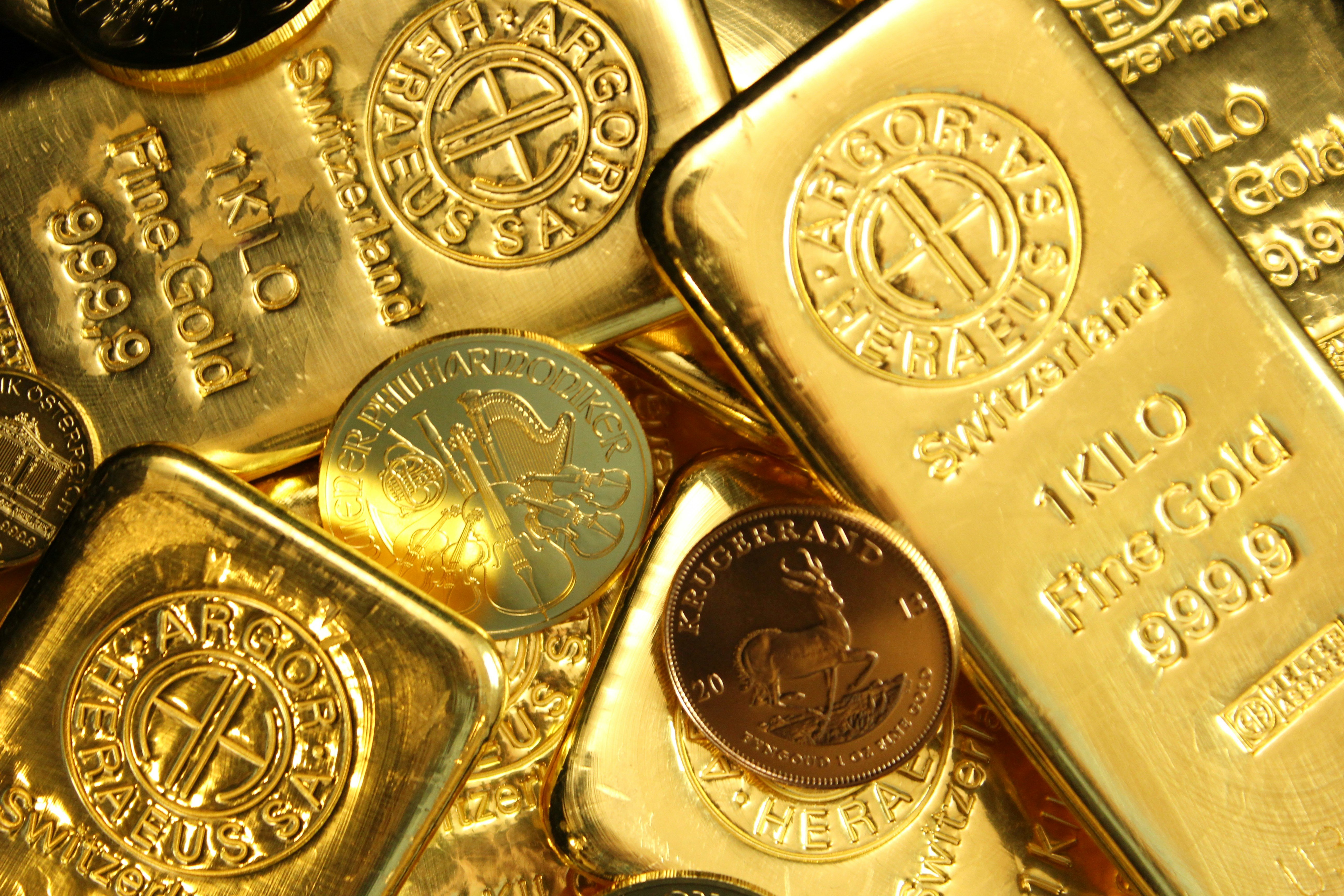
Gold has served as a store of value for thousands of years for one simple reason: governments cannot print it.
While the Federal Reserve can create unlimited dollars with the stroke of a keyboard, the supply of gold is constrained by:
- Geological scarcity
- The difficulty and expense of mining
- Physical limitations on production
That fundamental scarcity is what gives gold its enduring value across civilizations and throughout history.
The Federal Interest Expense Correlation
When you overlay the gold price chart with federal interest expense, the two lines move in near-perfect parallel.
As the government's interest costs explode (now exceeding $1 trillion annually), gold rises in lockstep. Unless deficits miraculously disappear (and they won't) gold has a clear path higher.
Gold Price Forecasts for 2026
Financial analysts are now forecasting gold could reach $5,000 to $6,000 per ounce in 2026, with potential to go even higher depending on how aggressively the Fed expands its balance sheet.
Some prominent forecasts include:
- Goldman Sachs: $5,000/oz by end of 2026
- Bank of America: $6,000/oz within 18 months
- Independent analysts: $6,000+ if Fed balance sheet exceeds $12 trillion
Bond Markets Signal Rising Inflation Expectations
The bond market is already pricing in higher inflation ahead. Despite six Federal Reserve rate cuts in 2025, the 10-year Treasury yield hasn't budged from above 4 percent.
This tells you that bond investors are demanding higher returns to compensate for the inflation risk they see coming. When the bond market (often called the "smart money") starts pricing in inflation, that's a warning sign that shouldn't be ignored.
The Real Stock Market Performance (Measured in Gold)
Want to know how stocks really performed in 2025? Measure them in gold, not dollars.
- Gold: Up 60%
- S&P 500: Up 13%
In real terms measured against something that holds its value, stock investors lost significant purchasing power in 2025. They just don't realize it yet because they're counting in depreciating dollars.
This is the hidden tax of inflation and currency debasement. Your account balance might show gains in dollar terms, but if those dollars buy substantially less, you're actually going backwards.
How to Protect Your Retirement Savings in 2026
Given the economic headwinds ahead, what can retirees and pre-retirees do to protect their savings?
Why Major Institutions Are Recommending Gold
Even Goldman Sachs, the long-time proponent of traditional stock and bond portfolios, is now recommending gold as a core portfolio holding. They're telling clients that the traditional 60/40 stock-bond split no longer works in an era of currency debasement.
Major Wall Street firms are now recommending precious metals as the third pillar of portfolio construction, alongside stocks and bonds.
The Case for Physical Gold
There's an important distinction between:
- Physical gold (coins and bars you own directly)
- Gold ETFs (paper claims on gold held by institutions)
- Gold mining stocks (equity in companies that mine gold)
During periods of severe financial stress, physical gold provides the most direct protection because:
- You own it outright
- It's not dependent on any institution's solvency
- It can't be diluted or devalued by government policy
- It has no counterparty risk
When to Act: The Window Is Closing
The time to protect savings is before inflation becomes obvious to everyone. Once prices are visibly spiraling and the crisis is undeniable, the cost of protection multiplies.
Gold tends to move ahead of consumer price inflation because:
- Central banks recognize monetary dynamics first
- Institutional investors act on data before it hits headlines
- Sophisticated money doesn't wait for confirmation
Central banks are buying now. Major institutions are repositioning now. They're not waiting for the recession to be officially declared or for inflation to hit 10%.
They're acting on what the data is already screaming.
Understanding the Risk to Dollar-Denominated Assets
Your retirement savings are denominated in dollars. If the dollar loses 20%, 30%, or 40% of its purchasing power over the next few years (and the current trajectory suggests it will), then your nest egg shrinks by the same amount.
No matter how well your stocks or bonds perform in dollar terms.
This is the critical point many investors miss. You can have a portfolio that "performs well" in nominal terms while still losing substantial purchasing power in real terms.
Gold's Historical Role in Currency Crises
Gold doesn't depend on:
- Any government's promise
- Any central bank's competence
Any politician's fiscal discipline
It has intrinsic value recognized across every culture and throughout history.
When currencies fail, when governments default, when inflation spirals out of control, gold maintains its purchasing power.
Conclusion: Retirement Savers in 2026
The convergence of factors facing the U.S. economy in 2026 creates an unprecedented challenge for retirement savers:
- Fed money printing restarting at $40B/month (likely to increase)
- Hidden jobs crisis with negative real employment growth
- Rising unemployment threatening to trigger recession
- Corporate bankruptcies accelerating to crisis levels
- Exploding government deficits requiring more money printing
- Dollar purchasing power eroding through currency debasement
For Americans who have spent decades building retirement savings, this environment demands a serious reassessment of traditional portfolio construction.
The institutions and central banks that manage trillions of dollars are already acting on this reality. They're accumulating gold at record pace because they understand what's coming.
The question for individual investors is: will you act before the crisis becomes obvious to everyone, or wait until the cost of protection has already multiplied?